
Masor tenga (Assamese sour fish curry)
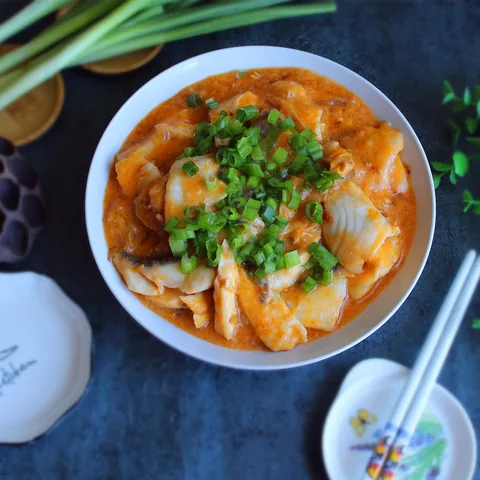
Masor tenga is a light, sour fish curry from Assam, made with rohu or similar river fish in a thin broth soured with tomato, lemon or elephant apple. It has no heavy masala, just ginger, turmeric and a little mustard oil, so the flavour is clean, tart and fresh. It is served with plain rice and is often eaten on hot days or when the stomach needs something light.
Diets
Allergens
Contains (in a typical recipe):
What it is made of
Recipe
Ingredients
- 600 g rohu or similar freshwater fish, steaks
- 3 tomatoes (300 g)
- 1 lemon, juice
- 1 tbsp mustard oil (15 ml)
- 1 tsp grated ginger, 1/2 tsp turmeric
- fenugreek seeds, green chilli, coriander, salt, 500 ml water
Method
- Rub the fish with salt and turmeric and lightly fry for 2 minutes per side in half the oil.
- Heat the remaining oil with fenugreek seeds until fragrant.
- Add the tomatoes and ginger and cook until soft.
- Pour in the water and chilli and simmer for 10 minutes.
- Add the fish and cook gently for 8 minutes; finish with lemon juice and coriander.
How to make it lighter
- Poach the fish instead of frying to cut oil.
- Use just a teaspoon of mustard oil.
- Serve with a small portion of rice and extra greens.
History
Tenga means sour in Assamese, and sour fish curries are a signature of Assamese cooking. They are considered a cooling, digestive dish suited to the humid climate.
Count it in one photo
Point your camera at the table — Me Nutrition recognises Masor tenga (Assamese sour fish curry) and every other dish, with calories and macros for each. Ate only half? Slide it.
Download on the App StoreSimilar dishes
Values are estimates per 100 g for a typical recipe; home and restaurant versions vary. Diets and allergens are worked out from the ingredients of a typical recipe — always check with whoever cooked the dish. Not medical advice. Nutrition data: Me Nutrition dish database v15. How we count →