
Pão de batata (Brazilian potato bread rolls)
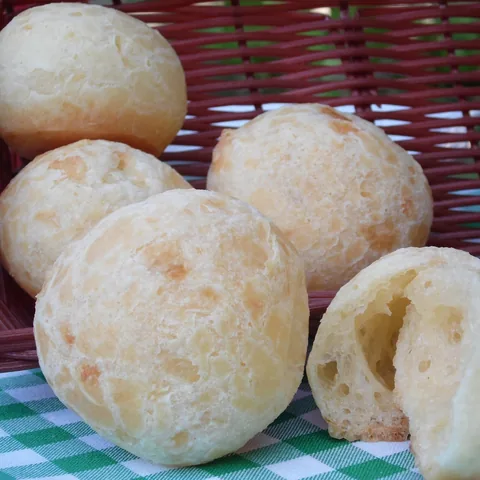
Pão de batata are pillowy bread rolls with mashed potato worked into the dough, which keeps them soft for days. The classic bakery version hides a spoonful of creamy catupiry cheese in the middle, while others are filled with shredded chicken or seasoned beef. They are a favourite snack with coffee in the afternoon.
Diets
Allergens
Contains (in a typical recipe):
What it is made of
Recipe
Ingredients
- 300 g potatoes, boiled and mashed
- 500 g flour
- 200 ml warm milk
- 1 egg plus 1 yolk for brushing
- 50 g butter, soft
- 10 g dried yeast
- 20 g sugar
- 8 g salt
- 200 g catupiry or cream cheese
Method
- Dissolve the yeast and sugar in the warm milk and leave for 5 minutes.
- Mix the mashed potato, egg, butter and salt, then add the milk.
- Add the flour gradually and knead to a soft, smooth dough.
- Cover and let rise for about 1 hour until doubled.
- Divide into 12 balls, flatten each, add a spoonful of cheese and seal well.
- Place seam-side down on a tray, rise for 20 minutes and brush with yolk.
- Bake at 180 °C for 20 to 25 minutes until golden.
How to make it lighter
- Use light cream cheese or ricotta for the filling.
- Replace a third of the flour with wholemeal flour for more fibre.
- Make the rolls smaller and freeze them to keep portions in check.
History
Potato breads came to Brazil with Portuguese and other European settlers, but the filled roll is a Brazilian bakery creation. Catupiry, a soft spreadable cheese created in Minas Gerais in the early twentieth century, became the filling of choice.
Count it in one photo
Point your camera at the table — Me Nutrition recognises Pão de batata (Brazilian potato bread rolls) and every other dish, with calories and macros for each. Ate only half? Slide it.
Download on the App StoreSimilar dishes

Values are estimates per 100 g for a typical recipe; home and restaurant versions vary. Diets and allergens are worked out from the ingredients of a typical recipe — always check with whoever cooked the dish. Not medical advice. Nutrition data: Me Nutrition dish database v15. How we count →