
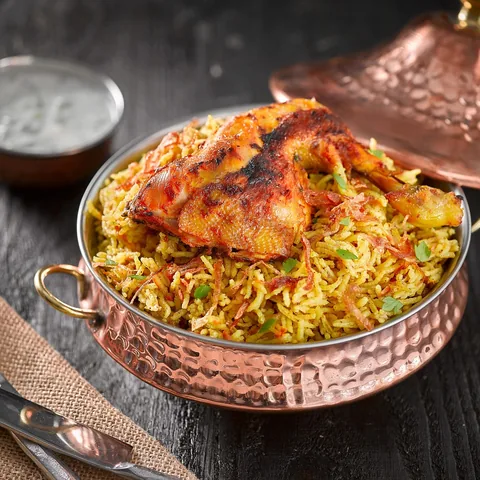
Arroz con pato (Peruvian duck with cilantro rice)
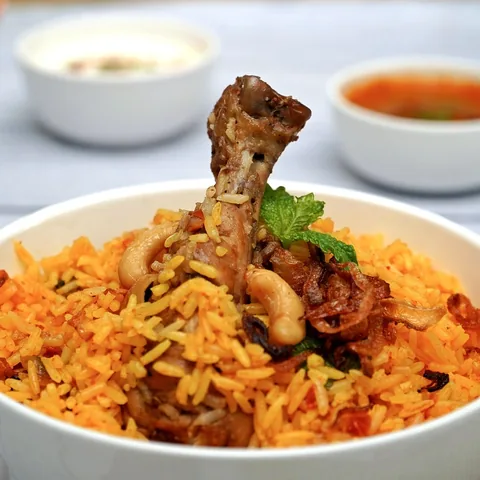
Peruvian arroz con pato is duck legs browned and braised in a base of onion, garlic, ají amarillo and a large amount of blended cilantro, then rice is cooked in the same green, duck-rich broth. Peas, diced red pepper and sometimes corn are mixed into the rice, and the duck is laid on top. The flavour is deeply herbal and savoury, and the dish is usually served with salsa criolla.
Diets
Allergens
None of the 14 major allergens in a typical recipe.
What it is made of
Recipe
Ingredients
- 4 duck legs
- 300 g long-grain rice
- 2 bunches cilantro, blended
- 2 tbsp ají amarillo paste
- 1 red onion, 4 garlic cloves
- 100 g peas, 1 red bell pepper
- 800 ml broth
- 1 tsp cumin, salt
Method
- Season the duck with salt and cumin and brown skin-side down until the fat renders; pour off most of it.
- Sauté onion, garlic and ají amarillo in the remaining fat.
- Add the cilantro purée and cook 5 minutes.
- Return the duck, add broth and braise covered 50 minutes.
- Remove the duck, add rice, peas and pepper to the broth and cook 20 minutes.
- Serve the rice topped with duck.
How to make it lighter
- Remove the skin before serving to cut a lot of fat.
- Pour off the rendered duck fat instead of cooking everything in it.
- Increase the peas and peppers and reduce the rice.
History
The dish is a pride of Chiclayo and the Lambayeque region on the northern coast, where it is a staple of Sunday family meals. Traditional versions add a little chicha de jora or dark beer to the braise, which cooks off during the long cooking.
Count it in one photo
Point your camera at the table — Me Nutrition recognises Arroz con pato (Peruvian duck with cilantro rice) and every other dish, with calories and macros for each. Ate only half? Slide it.
Download on the App StoreSimilar dishes
Values are estimates per 100 g for a typical recipe; home and restaurant versions vary. Diets and allergens are worked out from the ingredients of a typical recipe — always check with whoever cooked the dish. Not medical advice. Nutrition data: Me Nutrition dish database v15. How we count →