
Pan con chicharrón (Peruvian pork and sweet potato sandwich)
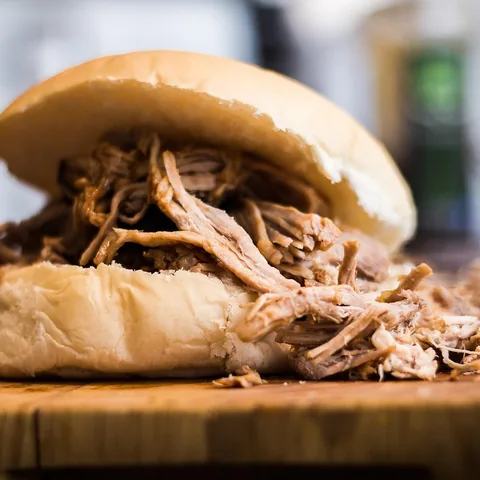
Pan con chicharrón is the great Sunday breakfast of Lima. Pieces of pork are simmered in salted water until the water evaporates, then fried in their own fat until crisp outside and tender within. They go into a crusty roll with slices of fried sweet potato and a pile of salsa criolla. Salty, sweet and tangy, it is usually eaten with coffee or a hot drink.
Diets
Allergens
Contains (in a typical recipe):
What it is made of
Recipe
Ingredients
- 800 g pork shoulder or belly, in chunks
- 2 sweet potatoes (400 g), sliced
- 6 crusty rolls (480 g)
- 1 red onion (150 g), thinly sliced
- 1 ají amarillo, in strips
- 60 ml lime juice
- garlic, salt, cilantro
Method
- Put the pork in a pan with salt, garlic and water to cover.
- Simmer until the water evaporates, then let the pork fry in its fat until golden.
- Fry the sweet potato slices in some of the fat until soft and browned.
- Mix onion, ají, lime, cilantro and salt for the salsa criolla.
- Slice the pork and fill each roll with pork, sweet potato and salsa; serve warm.
How to make it lighter
- Use lean shoulder and pour off excess fat before frying.
- Bake the sweet potato slices instead of frying them.
- Treat it as an occasional weekend breakfast and keep the rest of the day light.
History
Peruvian chicharrón differs from pork rinds elsewhere: it uses meaty pieces cooked in their own fat. The sandwich is sold from early morning at chicharronerías and street stalls, especially at weekends.
Count it in one photo
Point your camera at the table — Me Nutrition recognises Pan con chicharrón (Peruvian pork and sweet potato sandwich) and every other dish, with calories and macros for each. Ate only half? Slide it.
Download on the App StoreSimilar dishes
Values are estimates per 100 g for a typical recipe; home and restaurant versions vary. Diets and allergens are worked out from the ingredients of a typical recipe — always check with whoever cooked the dish. Not medical advice. Nutrition data: Me Nutrition dish database v15. How we count →