
Kaldereta (Filipino goat stew)
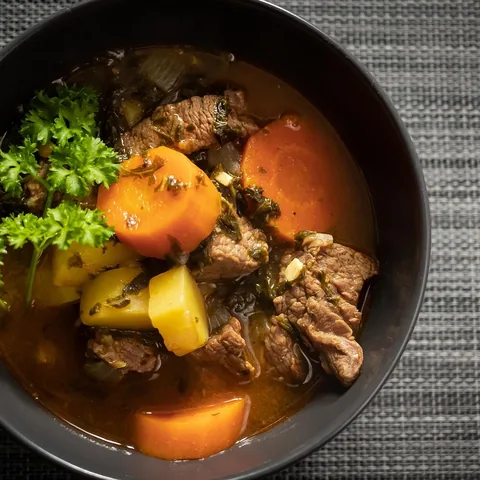
Kaldereta is a thick, brick-red stew of goat or beef cooked slowly in tomato sauce. Liver paste gives it body and a savory richness, while potatoes, carrots and bell peppers add sweetness. Chili and sometimes cheese finish the sauce. It is served at fiestas and family gatherings with plenty of rice.
Diets
Allergens
None of the 14 major allergens in a typical recipe.
What it is made of
Recipe
Ingredients
- 800 g goat or beef, cubed
- 300 g tomato sauce
- 2 potatoes and 1 carrot, cubed
- 1 red bell pepper
- 4 tbsp liver spread
- onion, garlic and chilies
Method
- Brown the meat in batches, then set aside.
- Sauté onion and garlic, return the meat and add tomato sauce and 500 ml water.
- Cover and simmer 1.5 hours until nearly tender.
- Add potatoes and carrot and cook 15 minutes.
- Stir in liver spread, bell pepper and chilies; simmer until the sauce thickens.
How to make it lighter
- Trim visible fat from the meat before cooking.
- Bulk up with more carrots and bell peppers.
- Skip the cheese to keep saturated fat down.
History
The name comes from the Spanish caldereta, meaning cooking pot, and reflects the colonial influence on Filipino stews. Local cooks replaced the Spanish ingredients with liver spread, chili and sometimes peanut butter. It is a classic party dish across the country.
Count it in one photo
Point your camera at the table — Me Nutrition recognises Kaldereta (Filipino goat stew) and every other dish, with calories and macros for each. Ate only half? Slide it.
Download on the App StoreSimilar dishes
Values are estimates per 100 g for a typical recipe; home and restaurant versions vary. Diets and allergens are worked out from the ingredients of a typical recipe — always check with whoever cooked the dish. Not medical advice. Nutrition data: Me Nutrition dish database v15. How we count →