
Filipino pork menudo
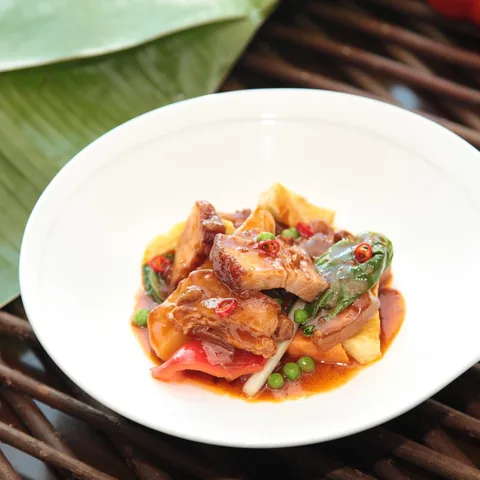
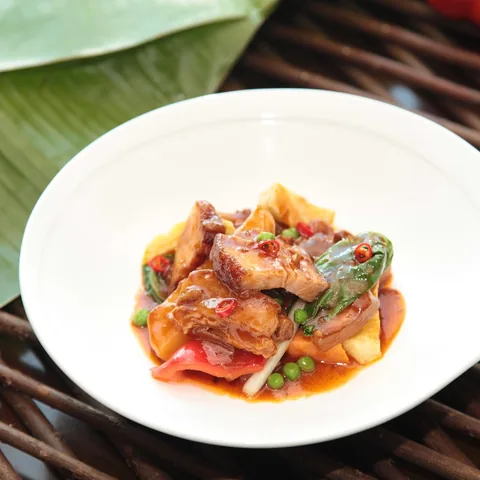
This menudo is a tomato-based stew of small pork and liver cubes with potatoes, carrots and sweet peppers. Raisins and sometimes chickpeas add pops of sweetness. The sauce is mildly tangy and coats rice well. It is a common home-cooked dish and a fixture at celebrations.
Diets
Allergens
None of the 14 major allergens in a typical recipe.
What it is made of
Recipe
Ingredients
- 500 g pork shoulder, diced
- 150 g pork liver, diced
- 250 g tomato sauce
- 2 potatoes and 1 carrot, diced
- 40 g raisins
- onion and garlic
Method
- Sauté garlic and onion, then brown the pork.
- Add tomato sauce and 300 ml water and simmer 30 minutes.
- Add potatoes and carrots and cook 15 minutes.
- Add liver and raisins and cook 5 minutes until just done.
- Season with salt, pepper and a little soy sauce.
How to make it lighter
- Choose lean pork and trim the fat.
- Add more carrots and peppers to stretch the meat.
- Go easy on the soy sauce to limit sodium.
History
The name comes from Spanish menudo, which refers to offal stews, although the Filipino version uses cubed meat and a tomato sauce rather than tripe. It belongs to the family of Spanish-influenced stews such as kaldereta and afritada. Each household keeps its own proportions.
Count it in one photo
Point your camera at the table — Me Nutrition recognises Filipino pork menudo and every other dish, with calories and macros for each. Ate only half? Slide it.
Download on the App StoreSimilar dishes
Values are estimates per 100 g for a typical recipe; home and restaurant versions vary. Diets and allergens are worked out from the ingredients of a typical recipe — always check with whoever cooked the dish. Not medical advice. Nutrition data: Me Nutrition dish database v15. How we count →