
Pirarucu de casaca (layered salted fish)
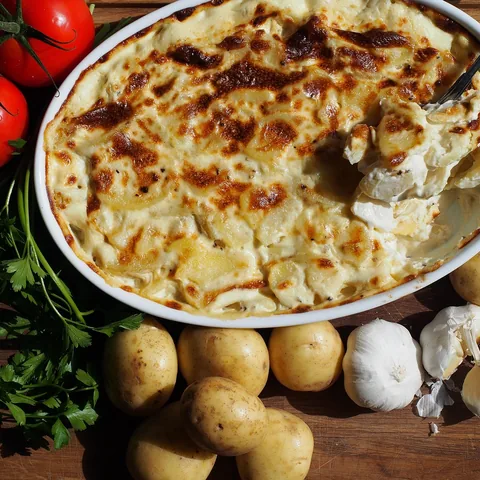
Pirarucu de casaca is a festive layered dish from Amazonas built around pirarucu, one of the largest freshwater fish in the world, sold dried and salted. The desalted fish is shredded and cooked with onion, tomato and coconut milk, then layered with moist cassava farofa and slices of fried ripe plantain. Topped with egg and olives, it is savoury, slightly sweet and filling. It is served at room temperature or warm.
Diets
Allergens
Contains (in a typical recipe):
What it is made of
Recipe
Ingredients
- 500 g salted pirarucu (or salt cod)
- 250 g cassava flour
- 3 ripe plantains
- 200 ml coconut milk
- 2 onions
- 2 tomatoes
- 3 eggs, boiled
- Green olives, coriander, oil
Method
- Soak the fish 24 hours, changing water often, then shred it.
- Fry onion and tomato in a little oil, add the fish and coconut milk.
- Toast the cassava flour with a spoon of the fish juices to make a moist farofa.
- Slice and pan-fry the plantains.
- Layer farofa, fish and plantain in a dish, finishing with farofa.
- Decorate with sliced eggs, olives and coriander.
- Warm in the oven for 10 minutes and serve.
How to make it lighter
- Bake the plantain instead of frying it.
- Use light coconut milk.
- Desalt the fish thoroughly to keep sodium in check.
History
Salted pirarucu has long been called the 'cod of the Amazon', and many dishes treat it the way Portuguese cooking treats bacalhau. 'Casaca' means a coat, a name usually explained by the layers that dress the fish.
Count it in one photo
Point your camera at the table — Me Nutrition recognises Pirarucu de casaca (layered salted fish) and every other dish, with calories and macros for each. Ate only half? Slide it.
Download on the App StoreSimilar dishes
Values are estimates per 100 g for a typical recipe; home and restaurant versions vary. Diets and allergens are worked out from the ingredients of a typical recipe — always check with whoever cooked the dish. Not medical advice. Nutrition data: Me Nutrition dish database v15. How we count →