
Tutu à mineira (bean purée with cassava flour)
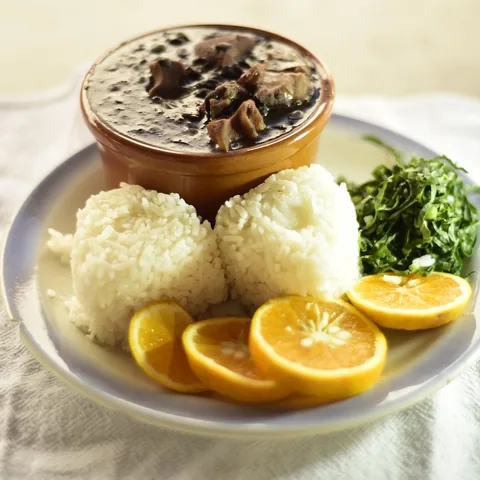
Tutu is a thick, spoonable purée of beans and cassava flour flavoured with bacon, onion and garlic. In its full Minas form it arrives with pork crackling or a chop, sliced sausage, a boiled or fried egg and sautéed collard greens. The taste is earthy and smoky, and the texture is soft like polenta.
Diets
Allergens
Contains (in a typical recipe):
What it is made of
Recipe
Ingredients
- 600 g cooked beans with 300 ml of their broth
- 100 g bacon, diced
- 1 onion, 3 garlic cloves
- 100 g cassava flour
- 2 boiled eggs
- Sautéed collard greens to serve
Method
- Blend the beans with their broth until smooth.
- Fry the bacon, then the onion and garlic, in a pot.
- Pour in the bean purée and bring to a simmer.
- Rain in the cassava flour, stirring, until thick and creamy, about 5 minutes.
- Serve topped with sliced egg and greens alongside.
How to make it lighter
- Use a spoon of oil instead of bacon to cut fat.
- Serve with a large portion of greens.
- Skip the pork crackling and choose grilled loin.
History
Tutu is one of the oldest dishes of Minas Gerais, rooted in the same colonial pantry of beans, cassava and pork that fed miners and travellers. It is now a standard item on menus of traditional mineiro restaurants.
Count it in one photo
Point your camera at the table — Me Nutrition recognises Tutu à mineira (bean purée with cassava flour) and every other dish, with calories and macros for each. Ate only half? Slide it.
Download on the App StoreSimilar dishes
Values are estimates per 100 g for a typical recipe; home and restaurant versions vary. Diets and allergens are worked out from the ingredients of a typical recipe — always check with whoever cooked the dish. Not medical advice. Nutrition data: Me Nutrition dish database v15. How we count →