
Cuban black bean soup (potaje de frijoles negros)
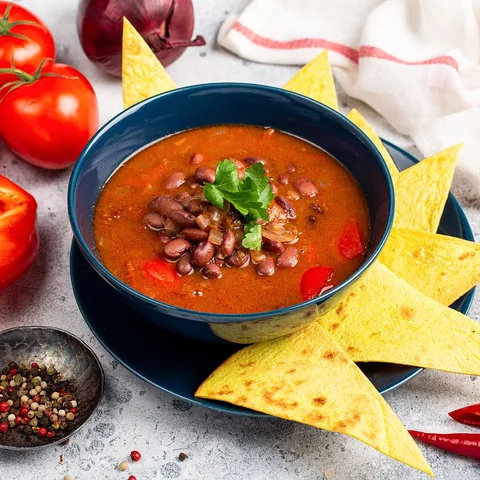
Potaje de frijoles negros is the everyday Cuban bean soup, thick and dark with a savory base of onion, green pepper and garlic. Cumin and oregano give it warmth, and a splash of vinegar at the end brightens the pot. It is ladled over white rice and topped with raw chopped onion.
Diets
Allergens
None of the 14 major allergens in a typical recipe.
What it is made of
Recipe
Ingredients
- 300 g dried black beans, soaked overnight
- 1 onion and 1 green pepper, chopped (220 g)
- 5 garlic cloves
- 2 tbsp olive oil (30 ml)
- 1 tsp cumin, 1 tsp oregano
- 1 bay leaf, 1 tbsp vinegar, salt
Method
- Simmer the soaked beans with the bay leaf in 1.5 liters water for 60 minutes.
- Fry onion, pepper and garlic in olive oil until soft.
- Add cumin and oregano and cook one minute.
- Stir the sofrito into the beans.
- Simmer another 30 minutes until the broth is thick.
- Add salt and vinegar and serve over rice.
How to make it lighter
- Mash a ladle of beans to thicken without cream.
- Cut the oil to a spoonful for a lean version.
- Pair with brown rice for a complete vegan meal.
History
Black beans have been a daily staple on the island for centuries, eaten with rice at nearly every meal. The soup is a home-cooking classic that families cook in large batches. Recipes vary slightly by region and household.
Count it in one photo
Point your camera at the table — Me Nutrition recognises Cuban black bean soup (potaje de frijoles negros) and every other dish, with calories and macros for each. Ate only half? Slide it.
Download on the App StoreSimilar dishes
Values are estimates per 100 g for a typical recipe; home and restaurant versions vary. Diets and allergens are worked out from the ingredients of a typical recipe — always check with whoever cooked the dish. Not medical advice. Nutrition data: Me Nutrition dish database v15. How we count →