
Yuca con mojo (cassava with garlic sauce)
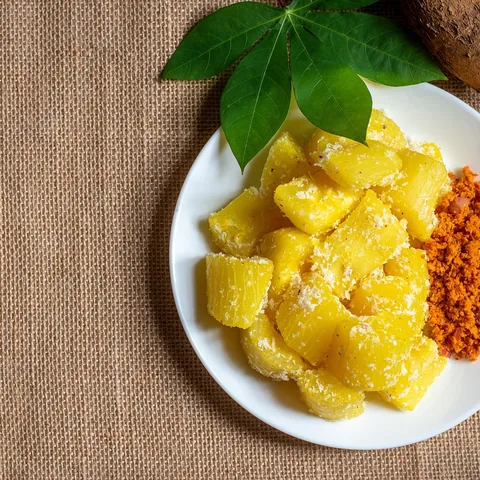
Yuca con mojo is boiled cassava poured over with a sizzling mojo of garlic, sour orange juice and oil. The root is soft and slightly starchy, and the sauce is sharp, garlicky and bright. It is a classic side for roast pork and a common part of Cuban holiday meals.
Diets
Allergens
None of the 14 major allergens in a typical recipe.
What it is made of
Recipe
Ingredients
- 800 g cassava (yuca), peeled
- 8 garlic cloves, sliced (30 g)
- 120 ml sour orange juice (or orange plus lime)
- 80 ml olive oil
- 1 small onion, sliced (70 g)
- 1 tsp salt
Method
- Cut the cassava into chunks and remove the woody core.
- Boil in salted water for 25 minutes until tender.
- Drain and keep warm on a platter.
- Warm the oil with garlic gently until fragrant but not browned.
- Add the juice and a pinch of salt and simmer one minute.
- Pour over the cassava and top with raw onion rings.
How to make it lighter
- Halve the oil and rely on the citrus for flavor.
- Steam instead of boiling to keep more nutrients.
- Pair with grilled fish rather than fried food.
History
Cassava was a staple of the indigenous Taino people long before European arrival. The mojo, a garlic and sour orange sauce, reflects Spanish influence on that native base. The pairing is now one of Cuba's most recognizable side dishes.
Count it in one photo
Point your camera at the table — Me Nutrition recognises Yuca con mojo (cassava with garlic sauce) and every other dish, with calories and macros for each. Ate only half? Slide it.
Download on the App StoreSimilar dishes
Values are estimates per 100 g for a typical recipe; home and restaurant versions vary. Diets and allergens are worked out from the ingredients of a typical recipe — always check with whoever cooked the dish. Not medical advice. Nutrition data: Me Nutrition dish database v15. How we count →