
Pinchos puertorriqueños (Puerto Rican skewers)
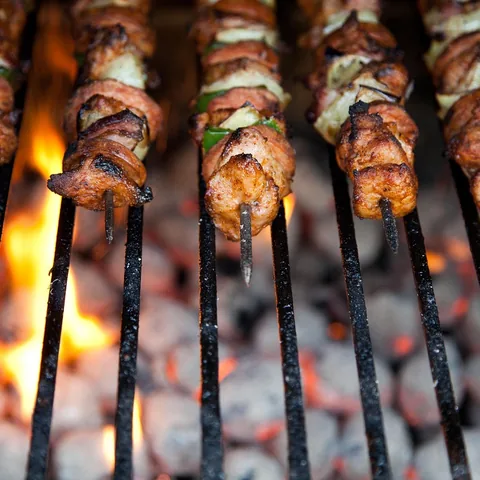
Pinchos are skewers of marinated pork or chicken grilled over charcoal and brushed with a sweet-tangy barbecue glaze. They are smoky, juicy and slightly sticky. At street stalls they come with a slice of bread at the end of the stick, which soaks up the juices.
Diets
Allergens
Contains (in a typical recipe):
What it is made of
Recipe
Ingredients
- 600 g pork loin or chicken thigh
- 4 garlic cloves
- 1 tsp oregano
- 2 tbsp vinegar
- 2 tbsp oil
- 100 ml barbecue sauce
- 4 slices bread
- salt and pepper
Method
- Cut the meat into 3 cm cubes.
- Marinate in garlic, oregano, vinegar, oil, salt and pepper for at least 2 hours.
- Thread onto skewers, leaving room at the end for bread.
- Grill over medium-high heat, turning, for 10-12 minutes.
- Brush with barbecue sauce during the last few minutes.
- Serve with a slice of bread on the end.
How to make it lighter
- Choose lean pork loin or chicken breast.
- Use a lighter homemade glaze with less sugar.
- Add vegetable skewers on the side.
History
Grilled skewers sold from street stalls and kiosks are a familiar sight in Puerto Rico, especially at festivals. The seasoning reflects Spanish-style garlic and oregano marinades.
Count it in one photo
Point your camera at the table — Me Nutrition recognises Pinchos puertorriqueños (Puerto Rican skewers) and every other dish, with calories and macros for each. Ate only half? Slide it.
Download on the App StoreSimilar dishes
Values are estimates per 100 g for a typical recipe; home and restaurant versions vary. Diets and allergens are worked out from the ingredients of a typical recipe — always check with whoever cooked the dish. Not medical advice. Nutrition data: Me Nutrition dish database v15. How we count →