
Quinua atamalada (creamy quinoa)
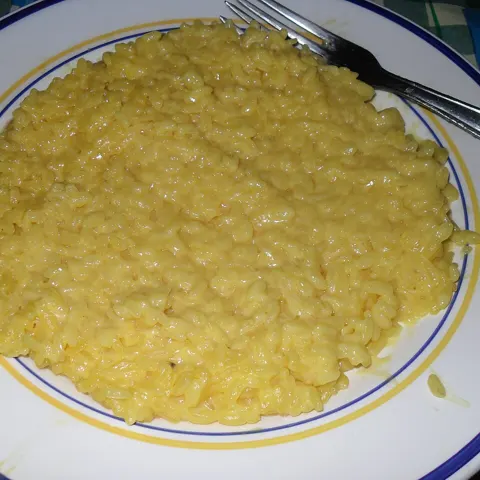
Quinua atamalada is quinoa cooked down with an onion and ají amarillo base until thick and spoonable, then enriched with milk and plenty of fresh cheese. The result is creamy and golden, with mild heat from the yellow pepper. Restaurants sometimes call the modern version "quinotto" and top it with mushrooms or grilled meat, while at home it is often a meatless main course.
Diets
Allergens
Contains (in a typical recipe):
What it is made of
Recipe
Ingredients
- 250 g quinoa, rinsed
- 1 onion, finely chopped
- 2 garlic cloves
- 2 tbsp ají amarillo paste
- 700 ml vegetable broth
- 150 ml milk
- 150 g fresh cheese, crumbled
- 1 tbsp oil, parsley, salt
Method
- Sauté onion, garlic and ají amarillo in the oil for 5 minutes.
- Add the quinoa and toast for 1 minute.
- Pour in the broth gradually and simmer, stirring, for 15 minutes.
- Add the milk and cook until thick and creamy.
- Stir in the cheese until it melts.
- Season and finish with chopped parsley.
How to make it lighter
- Use skimmed milk and half the cheese to lower fat.
- Fold in sautéed mushrooms or spinach to bulk it up.
- Serve with a large salad and keep the portion to one cup.
History
The word atamalado describes a dish thick enough to resemble the dough of a tamal. Highland cooks have long prepared quinoa this way, and Lima chefs later popularised it with the risotto-style name.
Count it in one photo
Point your camera at the table — Me Nutrition recognises Quinua atamalada (creamy quinoa) and every other dish, with calories and macros for each. Ate only half? Slide it.
Download on the App StoreSimilar dishes
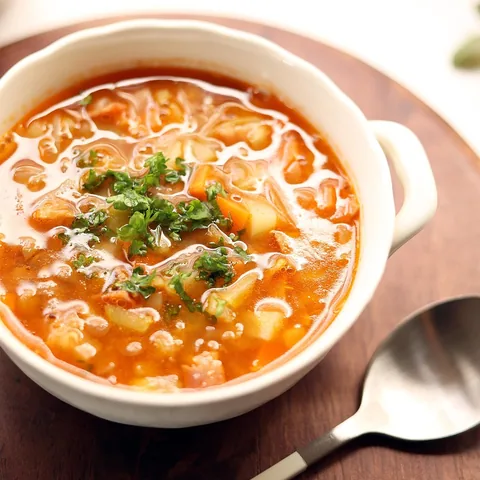
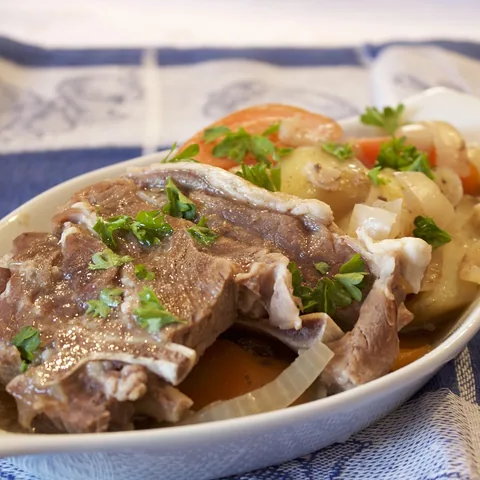
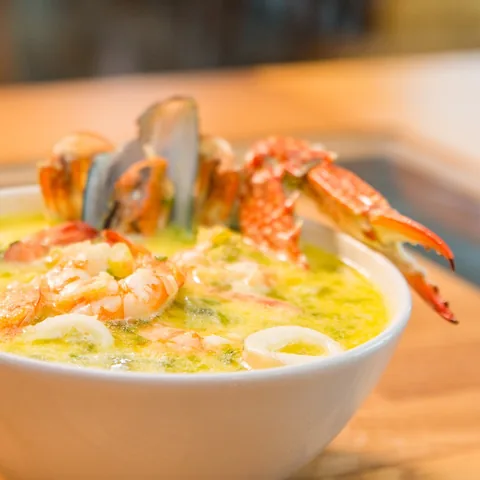
Values are estimates per 100 g for a typical recipe; home and restaurant versions vary. Diets and allergens are worked out from the ingredients of a typical recipe — always check with whoever cooked the dish. Not medical advice. Nutrition data: Me Nutrition dish database v15. How we count →