
Rista (Kashmiri red meatballs)
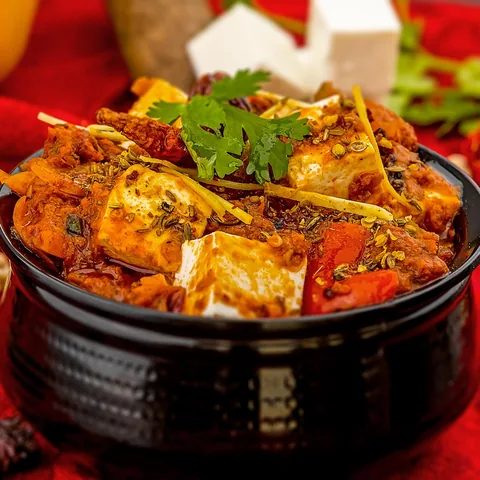
Rista is a close cousin of gushtaba, made from the same pounded mutton paste but served in a brilliant red gravy. The colour comes from Kashmiri chilli, which gives heat that is mild and rich rather than sharp. The meatballs are springy and juicy and the gravy is glossy with ghee and scented with fennel and ginger. It is usually eaten with plain rice.
Diets
Allergens
Contains (in a typical recipe):
What it is made of
Recipe
Ingredients
- 600 g minced lamb
- 3 tbsp ghee (45 g)
- 2 tbsp Kashmiri chilli powder
- 1 tsp ground fennel
- 1 tsp dried ginger powder
- 4 garlic cloves, salt, 400 ml water
Method
- Pound or process the lamb with salt until a smooth paste forms.
- Shape into 12 medium balls.
- Heat the ghee, add the chilli powder, fennel and ginger and stir for a few seconds.
- Pour in the water, bring to a boil and slide in the meatballs.
- Simmer gently for 30 minutes until the gravy reduces and turns glossy; serve with rice.
How to make it lighter
- Use lean lamb and skim off the ghee that rises.
- Reduce ghee to 1 tablespoon.
- Serve with steamed greens such as haak.
History
Rista is one of the standard dishes of the Kashmiri wazwan banquet, served alongside gushtaba and other mutton preparations. Its red gravy is the classic Kashmiri use of mild, deeply coloured local chillies.
Count it in one photo
Point your camera at the table — Me Nutrition recognises Rista (Kashmiri red meatballs) and every other dish, with calories and macros for each. Ate only half? Slide it.
Download on the App StoreSimilar dishes
Values are estimates per 100 g for a typical recipe; home and restaurant versions vary. Diets and allergens are worked out from the ingredients of a typical recipe — always check with whoever cooked the dish. Not medical advice. Nutrition data: Me Nutrition dish database v15. How we count →