
Kulich (Russian Easter bread)
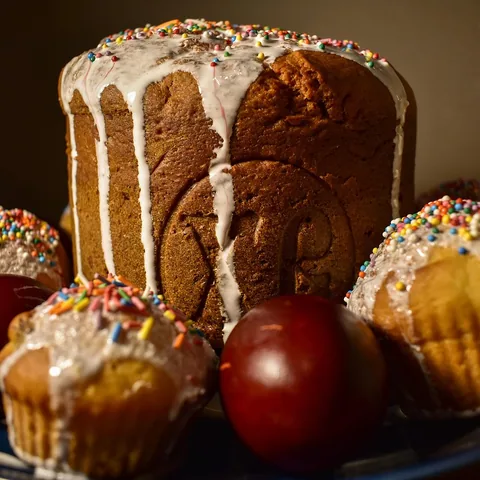
Kulich is a tall cylindrical yeast bread enriched with eggs, butter and sugar and studded with raisins and candied peel. It is baked in tall tins, then topped with a white sugar or meringue glaze and colourful sprinkles. The crumb is soft, fragrant with vanilla and slightly dense; it is sliced in rounds and eaten with paskha.
Diets
Allergens
Contains (in a typical recipe):
What it is made of
Recipe
Ingredients
- 600 g flour
- 250 ml warm milk
- 15 g dry yeast
- 5 eggs
- 150 g butter
- 200 g sugar
- 150 g raisins
- vanilla
- 1 egg white and 120 g icing sugar for the glaze
Method
- Make a sponge from milk, yeast, a little sugar and 150 g flour and let it bubble for 30 minutes.
- Beat in the eggs, sugar, melted butter, vanilla and remaining flour and knead a soft, sticky dough.
- Let it rise until doubled, then knead in the raisins.
- Fill greased tall tins one third full and let rise to the top.
- Bake at 180 °C for 35–45 minutes depending on size and cool on their sides.
- Whisk egg white with icing sugar and spread over the tops.
How to make it lighter
- Cut thin slices and pair with fruit.
- Reduce the sugar and butter slightly; the bread still rises well.
- Add dried apricots or nuts for more fibre.
History
Kulich is blessed in church on the eve of Orthodox Easter and shared with family during the festive days. Its tall shape and white top are a familiar sight in Russian homes each spring.
Count it in one photo
Point your camera at the table — Me Nutrition recognises Kulich (Russian Easter bread) and every other dish, with calories and macros for each. Ate only half? Slide it.
Download on the App StoreSimilar dishes
Values are estimates per 100 g for a typical recipe; home and restaurant versions vary. Diets and allergens are worked out from the ingredients of a typical recipe — always check with whoever cooked the dish. Not medical advice. Nutrition data: Me Nutrition dish database v15. How we count →