
Shangi (Russian potato tarts)
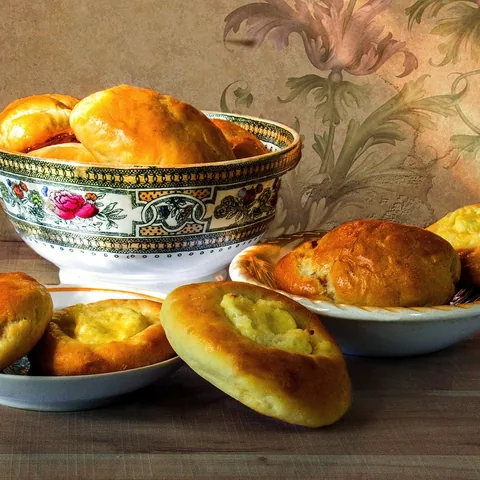
Shangi are round, open-faced yeast tarts topped with a layer of creamy mashed potato brushed with sour cream or butter. The soft bread base and golden, slightly crisp topping make them filling and homely. They are eaten warm with tea or milk, as a snack or alongside soup.
Diets
Allergens
Contains (in a typical recipe):
What it is made of
Recipe
Ingredients
- 500 g flour
- 250 ml warm milk
- 7 g dry yeast
- 1 egg
- 40 g butter
- 700 g potatoes
- 100 g sour cream
- salt
Method
- Mix flour, milk, yeast, egg, half the butter and salt into a soft dough and let it rise for an hour.
- Boil the potatoes and mash them with the remaining butter and a little milk.
- Divide the dough into balls and press each into a flat round with a raised rim.
- Spread mashed potato over each round and brush the top with sour cream.
- Let them rest 15 minutes, then bake at 200 °C for 20–25 minutes until golden.
How to make it lighter
- Use half whole-wheat flour for more fibre.
- Brush with light sour cream instead of melted butter.
- Serve with a vegetable soup or salad rather than as a large plateful.
History
Shangi belong to the traditional baking of the Russian North, the Urals and Siberia. Toppings vary by family and include potato, cottage cheese or grain porridge.
Count it in one photo
Point your camera at the table — Me Nutrition recognises Shangi (Russian potato tarts) and every other dish, with calories and macros for each. Ate only half? Slide it.
Download on the App StoreSimilar dishes
Values are estimates per 100 g for a typical recipe; home and restaurant versions vary. Diets and allergens are worked out from the ingredients of a typical recipe — always check with whoever cooked the dish. Not medical advice. Nutrition data: Me Nutrition dish database v15. How we count →