
Myaso po-frantsuzski (French-style meat)
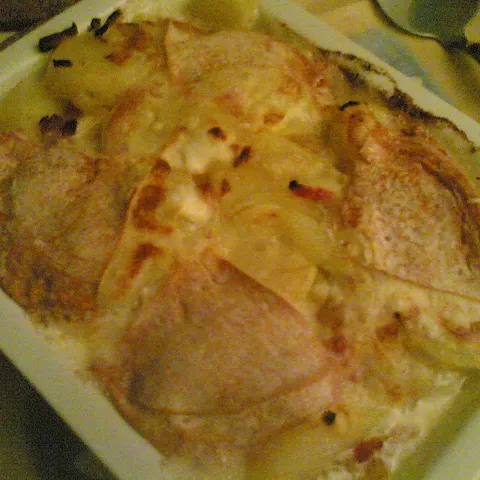
Despite the name, this is a Russian home bake: thin pounded slices of pork are layered with onion and often potato, spread with mayonnaise and covered with grated cheese. In the oven the cheese turns golden and the meat stays juicy under it. It is cut into squares and served hot on festive tables.
Diets
Allergens
Contains (in a typical recipe):
What it is made of
Recipe
Ingredients
- 700 g pork loin
- 3 onions
- 4 potatoes
- 150 g mayonnaise
- 200 g hard cheese
- oil for the tray
- salt, pepper
Method
- Cut the pork into slices 1 cm thick, pound them thin and season.
- Lay the meat in an oiled baking tray.
- Cover with onion rings, then thinly sliced potatoes, lightly salted.
- Spread mayonnaise over the top and sprinkle with grated cheese.
- Bake at 190 °C for 50–60 minutes until the potatoes are tender and the top is golden.
How to make it lighter
- Replace mayonnaise with sour cream or yogurt mixed with mustard.
- Use lean pork or chicken breast.
- Halve the cheese and add tomato slices for moisture.
History
The dish became widespread in Soviet home cooking, and the 'French' name is usually explained by the cheese-gratin style rather than any real French recipe. It remains a common choice for birthdays and New Year.
Count it in one photo
Point your camera at the table — Me Nutrition recognises Myaso po-frantsuzski (French-style meat) and every other dish, with calories and macros for each. Ate only half? Slide it.
Download on the App StoreSimilar dishes
Values are estimates per 100 g for a typical recipe; home and restaurant versions vary. Diets and allergens are worked out from the ingredients of a typical recipe — always check with whoever cooked the dish. Not medical advice. Nutrition data: Me Nutrition dish database v15. How we count →