
Paskha (Russian Easter curd dessert)
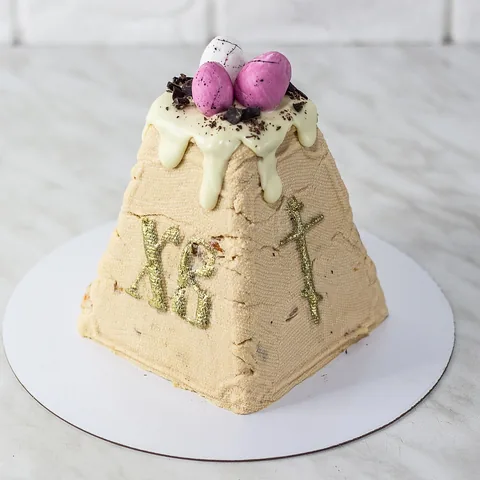
Paskha is a dense, creamy dessert of finely sieved cottage cheese mixed with butter, sour cream, sugar and egg yolks, studded with raisins and candied fruit. It is pressed overnight in a pyramid-shaped mould so the whey drains and it holds its shape. It is spread on slices of kulich at Easter.
Diets
Allergens
Contains (in a typical recipe):
What it is made of
Recipe
Ingredients
- 1 kg cottage cheese
- 150 g soft butter
- 200 g sour cream
- 150 g sugar
- 2 egg yolks
- 100 g raisins
- vanilla
Method
- Press the cottage cheese through a sieve until very smooth.
- Heat sour cream, yolks and sugar gently while stirring until slightly thickened, then cool.
- Beat in the butter, then the cheese and vanilla.
- Fold in the raisins.
- Line a mould with damp gauze, fill, weigh down and leave in the fridge for 12 hours to drain.
How to make it lighter
- Use low-fat cottage cheese and yogurt instead of sour cream.
- Cut the sugar and add more dried fruit.
- Serve a small spoonful with fresh fruit.
History
Paskha is one of the central foods of the Orthodox Easter table in Russia, eaten after Lent together with kulich and dyed eggs. The pyramid moulds are traditionally marked with the letters ХВ for "Christ is risen".
Count it in one photo
Point your camera at the table — Me Nutrition recognises Paskha (Russian Easter curd dessert) and every other dish, with calories and macros for each. Ate only half? Slide it.
Download on the App StoreSimilar dishes
Values are estimates per 100 g for a typical recipe; home and restaurant versions vary. Diets and allergens are worked out from the ingredients of a typical recipe — always check with whoever cooked the dish. Not medical advice. Nutrition data: Me Nutrition dish database v15. How we count →