
Kislye shchi (sauerkraut cabbage soup)
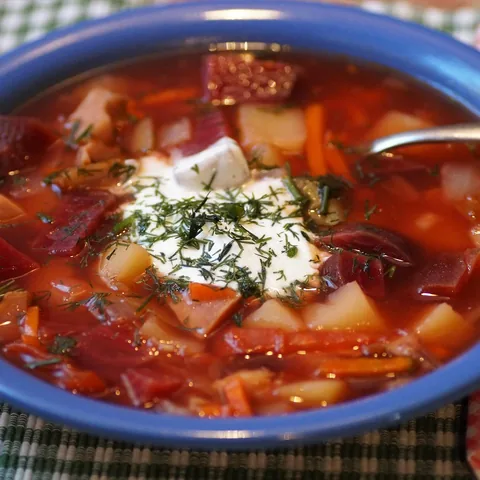
Kislye shchi is the winter version of shchi, made with sauerkraut instead of fresh cabbage. The fermented cabbage gives the beef broth a pleasant sourness that softens with long cooking. It is eaten with sour cream and black bread and is often said to taste even better the next day.
Diets
Allergens
None of the 14 major allergens in a typical recipe.
What it is made of
Recipe
Ingredients
- 500 g beef brisket
- 500 g sauerkraut
- 2 potatoes
- 1 carrot
- 1 onion
- 1 tbsp tomato paste
- 20 ml oil
- bay leaf
- sour cream to serve
Method
- Simmer the beef in 2.5 l water for 1.5 hours, skimming.
- Stew the sauerkraut with a little broth for 20 minutes.
- Fry onion and carrot with tomato paste.
- Add diced potatoes to the broth and cook 10 minutes.
- Add the sauerkraut, vegetables and bay leaf and simmer 25 minutes.
- Return the cut meat, rest the soup and serve with sour cream.
How to make it lighter
- Rinse the sauerkraut if you need less salt.
- Use lean beef and skim the fat.
- Leave out the potatoes for a lower-carb soup.
History
Sauerkraut was the main way to keep cabbage through the long Russian winter, so sour shchi was a cold-season staple. Traditionally the soup was left to stew slowly in a Russian stove, which deepened its flavour.
Count it in one photo
Point your camera at the table — Me Nutrition recognises Kislye shchi (sauerkraut cabbage soup) and every other dish, with calories and macros for each. Ate only half? Slide it.
Download on the App StoreSimilar dishes


Values are estimates per 100 g for a typical recipe; home and restaurant versions vary. Diets and allergens are worked out from the ingredients of a typical recipe — always check with whoever cooked the dish. Not medical advice. Nutrition data: Me Nutrition dish database v15. How we count →