
Sanda pao (Chengdu sticky rice balls)
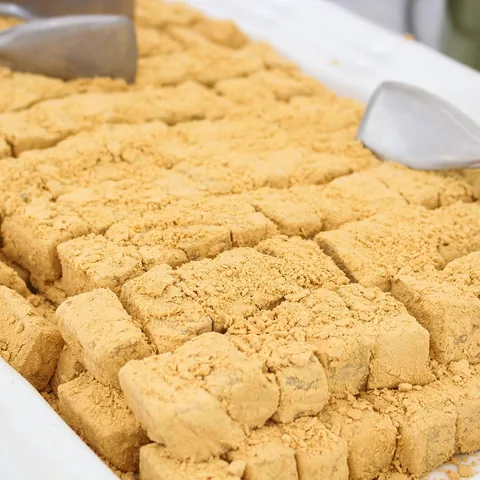
Sanda pao is a traditional Chengdu snack. Steamed glutinous rice is rolled into balls and tossed so they land on a board covered in roasted soybean flour, which sticks to the sticky rice. They are then dressed with brown sugar syrup. The balls are chewy and mildly sweet, with a toasted, nutty soybean flavor.
Diets
Allergens
Contains (in a typical recipe):
What it is made of
Recipe
Ingredients
- 300 g glutinous rice
- 60 g roasted soybean flour (kinako)
- 60 g brown sugar
- 100 ml water for syrup
- 10 g toasted sesame seeds
Method
- Soak the glutinous rice for 4 hours and steam it for about 30 minutes until soft.
- Pound or knead the hot rice briefly until very sticky.
- Make brown sugar syrup by simmering sugar with water for 5 minutes.
- Roll the rice into small balls and drop them into the soybean flour, turning until fully coated.
- Drizzle with the syrup and sprinkle with sesame.
How to make it lighter
- Use less syrup and make smaller balls for portion control.
- Roasted soy flour adds protein and fibre.
- Eat as an occasional treat because the rice is dense in carbohydrates.
History
The name refers to the thump of the balls hitting the board, said to resemble the sound of cannon fire. It is one of Chengdu's classic traditional snacks, sold by street vendors and in snack shops.
Count it in one photo
Point your camera at the table — Me Nutrition recognises Sanda pao (Chengdu sticky rice balls) and every other dish, with calories and macros for each. Ate only half? Slide it.
Download on the App StoreSimilar dishes
Values are estimates per 100 g for a typical recipe; home and restaurant versions vary. Diets and allergens are worked out from the ingredients of a typical recipe — always check with whoever cooked the dish. Not medical advice. Nutrition data: Me Nutrition dish database v15. How we count →