
Satsebeli (Georgian tomato sauce)
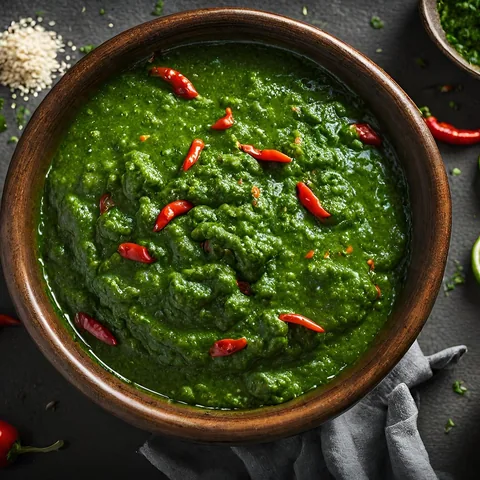
Satsebeli is the general Georgian word for a dipping sauce, but it most often means this vivid tomato version. Ripe tomatoes, sometimes with red pepper, are cooked and sieved, then seasoned with garlic, chili, coriander, khmeli suneli and plenty of fresh cilantro and basil. It is tangy, gently hot and fragrant, and it is the classic partner for mtsvadi, kebabs and fried potatoes.
Diets
Allergens
None of the 14 major allergens in a typical recipe.
What it is made of
Recipe
Ingredients
- 1.5 kg ripe tomatoes
- 1 red bell pepper (optional)
- 4 garlic cloves
- 1 hot chili pepper
- 1 bunch cilantro and a few basil leaves
- 1 tsp ground coriander, 1 tsp khmeli suneli
- Salt, a pinch of sugar
Method
- Chop the tomatoes and pepper and simmer for 15 minutes until soft.
- Push through a sieve to remove skins and seeds.
- Return to the pot and simmer for 15-20 minutes until thickened.
- Add crushed garlic, chopped chili, spices, salt and sugar.
- Stir in the chopped herbs off the heat and cool before serving.
How to make it lighter
- Satsebeli is a light alternative to ketchup – no added oil and little sugar.
- Use it as a base for stews or a sauce for grilled vegetables.
- Adjust the chili to keep it child-friendly.
History
Tomato satsebeli is made in large quantities in late summer when tomatoes are cheap and ripe, and it is often bottled for winter. Some cooks serve it fresh and raw, others simmer it for a deeper flavour.
Count it in one photo
Point your camera at the table — Me Nutrition recognises Satsebeli (Georgian tomato sauce) and every other dish, with calories and macros for each. Ate only half? Slide it.
Download on the App StoreSimilar dishes

Values are estimates per 100 g for a typical recipe; home and restaurant versions vary. Diets and allergens are worked out from the ingredients of a typical recipe — always check with whoever cooked the dish. Not medical advice. Nutrition data: Me Nutrition dish database v15. How we count →