
Ajika (Megrelian chili paste)
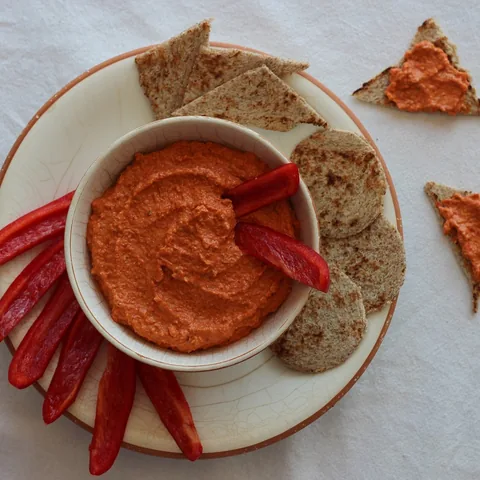
Ajika is the hot, aromatic paste of Samegrelo in western Georgia. Red chili peppers are ground with plenty of garlic, salt, coriander seed, blue fenugreek, dill and cilantro into a thick, rust-red paste. Used by the spoonful, it seasons meat, beans and corn porridge, or is spread thinly on bread for those who love heat.
Diets
Allergens
None of the 14 major allergens in a typical recipe.
What it is made of
Recipe
Ingredients
- 300 g fresh red chili peppers, seeds partly removed
- 50 g dried chili peppers, soaked
- 2 heads garlic
- 1 bunch cilantro
- ½ bunch dill
- 2 tsp ground coriander, 1 tsp blue fenugreek
- 2 tbsp salt
Method
- Wear gloves and remove stems and some seeds from the chilies.
- Soak the dried chilies in warm water for 20 minutes and drain.
- Grind fresh and dried chilies with the garlic into a coarse paste.
- Add chopped herbs, spices and salt and grind again until thick and even.
- Pack into clean jars and keep in the fridge.
How to make it lighter
- Use a teaspoon to season food instead of adding oil or rich sauces.
- Removing more seeds makes ajika milder for sensitive stomachs.
- Mix a little with yogurt for a lighter dip.
History
Ajika is a cornerstone of Megrelian cooking, a regional cuisine known across Georgia for its bold spice. Similar pastes are also made in neighbouring Abkhazia, and every household has its own balance of chili, garlic and herbs.
Count it in one photo
Point your camera at the table — Me Nutrition recognises Ajika (Megrelian chili paste) and every other dish, with calories and macros for each. Ate only half? Slide it.
Download on the App StoreSimilar dishes
Values are estimates per 100 g for a typical recipe; home and restaurant versions vary. Diets and allergens are worked out from the ingredients of a typical recipe — always check with whoever cooked the dish. Not medical advice. Nutrition data: Me Nutrition dish database v15. How we count →