
Yassa poulet (Senegalese lemon-onion chicken)
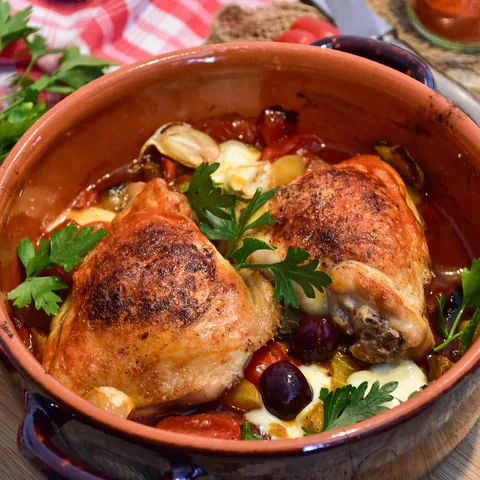
Yassa is chicken marinated for hours in lemon juice, mustard and plenty of onions, then grilled and slowly simmered in the soft, tangy onion sauce. The onions melt into a sweet-sharp gravy with a touch of green olives. It is poured over white rice and is one of Senegal's best-loved dishes.
Diets
Allergens
Contains (in a typical recipe):
What it is made of
Recipe
Ingredients
- 1000 g chicken pieces
- 600 g onion
- 100 ml lemon juice
- 30 g mustard
- 80 g green olives
- 60 ml vegetable oil for frying
- 10 g garlic
Method
- Marinate chicken in lemon juice, mustard, garlic, salt and half the sliced onions for at least 2 hours
- Grill or brown the chicken pieces and set aside
- Fry the remaining onions slowly in oil until soft and golden
- Return the chicken with marinade and a little water, add olives and simmer for 30-40 minutes
- Serve over rice with the onion sauce
How to make it lighter
- Remove the skin and grill the chicken to reduce fat
- Use less oil for the onions and cook them slowly with a splash of water
- Serve with brown rice or a green salad
History
Yassa comes from the Casamance region in the south and spread through the country and across West Africa. It is a staple of family meals and festive tables, and it is also made with fish.
Count it in one photo
Point your camera at the table — Me Nutrition recognises Yassa poulet (Senegalese lemon-onion chicken) and every other dish, with calories and macros for each. Ate only half? Slide it.
Download on the App StoreSimilar dishes
Values are estimates per 100 g for a typical recipe; home and restaurant versions vary. Diets and allergens are worked out from the ingredients of a typical recipe — always check with whoever cooked the dish. Not medical advice. Nutrition data: Me Nutrition dish database v15. How we count →