
Shengjian bao (pan-fried pork buns)
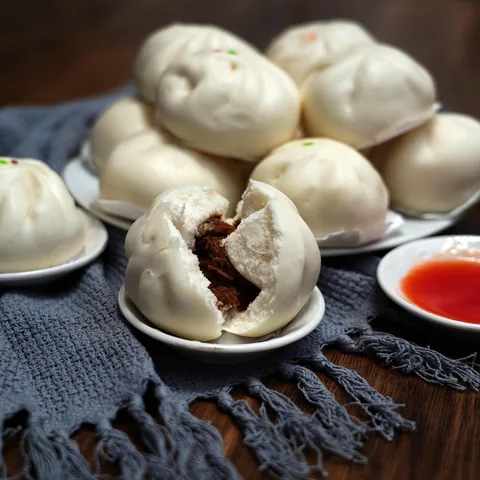
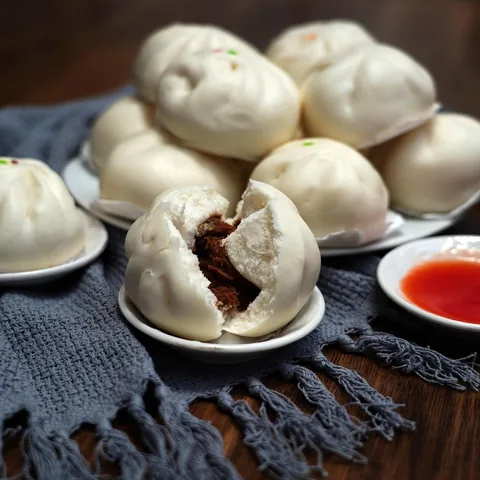
Shengjian bao are small yeast-dough buns filled with seasoned pork and a savory aspic that melts into soup. They are fried bottom-down until crisp and golden, then steamed in the same pan. A sprinkle of sesame and scallion finishes them, and they are best eaten hot with a bite of vinegar.
Diets
Allergens
Contains (in a typical recipe):
What it is made of
Recipe
Ingredients
- 300 g flour
- 5 g instant yeast
- 170 ml warm water
- 300 g minced pork
- 100 g pork aspic or jellied stock
- 2 tbsp soy sauce
- 2 scallions, chopped
- 1 tbsp sesame seeds
- Oil for frying
Method
- Knead flour, yeast and water to a smooth dough and let it rise for 1 hour.
- Mix pork with soy sauce, ginger and aspic until sticky.
- Divide the dough into 12 balls, flatten, fill and pleat the tops closed.
- Rest the buns 15 minutes, then fry bottoms in oil until golden.
- Add a little water, cover and steam for 8 minutes.
- Sprinkle with sesame and scallion and serve hot.
How to make it lighter
- Use less oil and more water when steaming to lighten the buns.
- Choose lean pork and add finely chopped greens to the filling.
- Dip in vinegar rather than chili oil.
History
The buns are a Shanghai street breakfast classic, sold from tea houses and street stalls for generations. Unlike steamed soup dumplings they use a fluffier raised dough that crisps underneath.
Count it in one photo
Point your camera at the table — Me Nutrition recognises Shengjian bao (pan-fried pork buns) and every other dish, with calories and macros for each. Ate only half? Slide it.
Download on the App StoreSimilar dishes
Values are estimates per 100 g for a typical recipe; home and restaurant versions vary. Diets and allergens are worked out from the ingredients of a typical recipe — always check with whoever cooked the dish. Not medical advice. Nutrition data: Me Nutrition dish database v15. How we count →