
Sindhi biryani
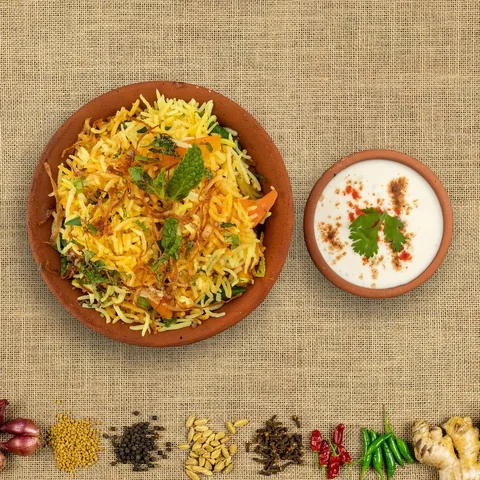
Sindhi biryani is a bold, tangy version of the layered rice dish, made with meat, potatoes, tomatoes, dried plums, yogurt and plenty of green chilli and fresh herbs. The rice is parboiled and layered with the masala, then steamed on low heat so every grain takes colour and aroma. It tastes spicy, sour and herby, and is eaten with raita and salad.
Diets
Allergens
Contains (in a typical recipe):
What it is made of
Recipe
Ingredients
- 500 g lamb, in pieces
- 400 g basmati rice
- 300 g potatoes
- 300 g tomatoes
- 150 g yogurt
- 3 green chillies, a handful of mint and coriander
- 5 dried plums, 2 onions, 80 ml oil, spices, salt
Method
- Fry onions in oil until brown, add the meat, spices, tomatoes and yogurt and cook until tender.
- Add potatoes, plums and green chillies and simmer until the potatoes are done.
- Parboil the rice with salt and whole spices until 70 percent cooked.
- Layer rice and masala in a heavy pot with herbs.
- Seal the lid and steam on low heat for 25-30 minutes.
How to make it lighter
- Use more potatoes and less oil in the masala.
- Serve with a large cucumber-yogurt raita.
- Use chicken breast for a leaner dish.
History
Sindhi biryani is a signature of the Sindh province and its cooks, who are known for generous spice and the use of dried plums for sourness. It is a staple of weddings and festive meals.
Count it in one photo
Point your camera at the table — Me Nutrition recognises Sindhi biryani and every other dish, with calories and macros for each. Ate only half? Slide it.
Download on the App StoreSimilar dishes
Values are estimates per 100 g for a typical recipe; home and restaurant versions vary. Diets and allergens are worked out from the ingredients of a typical recipe — always check with whoever cooked the dish. Not medical advice. Nutrition data: Me Nutrition dish database v15. How we count →