
Tinutuan (Manado vegetable rice porridge)
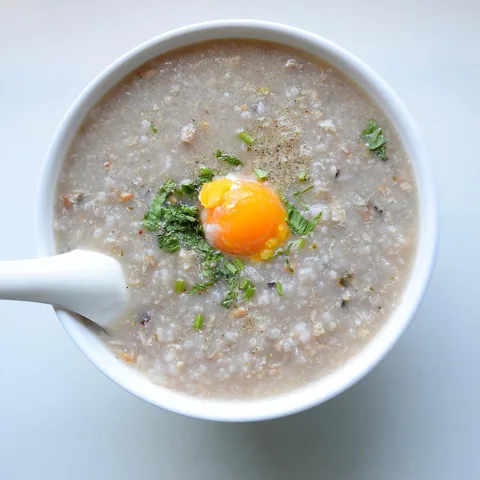
Tinutuan, also called bubur Manado, is a golden porridge of rice cooked with pumpkin, sweet corn, sweet potato, spinach and herbs such as basil and lemongrass. It is soft and mildly savory and is typically served with fried salted fish, sambal and lime. It is a popular breakfast in North Sulawesi.
Diets
Allergens
None of the 14 major allergens in a typical recipe.
What it is made of
Recipe
Ingredients
- 100 g rice
- 300 g pumpkin, cubed
- 1 corn cob (200 g), kernels cut off
- 150 g sweet potato, cubed
- 100 g spinach
- 1 handful basil
- 1 stalk lemongrass, bruised
- 1.2 litres water and salt
Method
- Boil the rice in the water with the lemongrass for 15 minutes.
- Add the pumpkin, sweet potato and corn.
- Cook until the rice breaks down and the porridge thickens, about 20 minutes.
- Stir often so it does not stick.
- Add the spinach and basil and cook 2 minutes.
- Season with salt and serve hot with sambal and lime.
How to make it lighter
- Naturally low in fat and rich in fiber and vitamin A.
- Serve with a boiled egg or tempeh for more protein.
- Add less rice and more pumpkin for fewer calories.
History
The porridge is a signature dish of Manado in North Sulawesi and is a staple of the local breakfast. It is valued as a filling meal that uses a lot of vegetables.
Count it in one photo
Point your camera at the table — Me Nutrition recognises Tinutuan (Manado vegetable rice porridge) and every other dish, with calories and macros for each. Ate only half? Slide it.
Download on the App StoreSimilar dishes
Values are estimates per 100 g for a typical recipe; home and restaurant versions vary. Diets and allergens are worked out from the ingredients of a typical recipe — always check with whoever cooked the dish. Not medical advice. Nutrition data: Me Nutrition dish database v15. How we count →