
Ttu lavash (sour fruit leather)
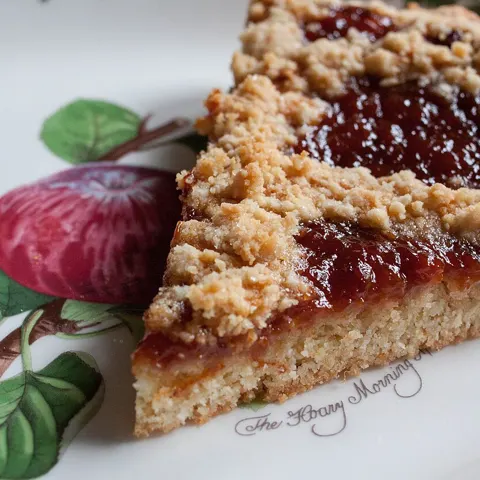
Ttu lavash means “sour lavash”: a fruit purée, usually of sour plums or apricots, spread very thin and dried until it becomes a flexible, glossy sheet. It is tart, fruity and chewy, and is torn into strips and eaten as a snack. It is also soaked or melted into stews and sauces to add sourness. Rolled sheets keep for months.
Diets
Allergens
None of the 14 major allergens in a typical recipe.
What it is made of
Recipe
Ingredients
- 1 kg ripe plums or apricots, pitted
- 2–3 tbsp water
- 1 tbsp sugar (optional)
- a little oil for the tray
Method
- Simmer the fruit with the water for 15 minutes until very soft.
- Purée until smooth and sieve out the skins; add sugar if the fruit is very sour.
- Spread 2–3 mm thick on an oiled, paper-lined tray.
- Dry in the oven at 60–70 °C with the door slightly open for 6–8 hours, until no longer sticky.
- Peel off, roll up in paper and store in a dry place.
How to make it lighter
- Skip the sugar — the natural tartness is the point.
- A 30 g strip is a fat-free, portable snack.
- Dissolve a piece in stews instead of adding lemon or vinegar.
History
Drying fruit purée in the sun is an old way of preserving the summer harvest in Armenia and the wider Caucasus. Rolls of ttu lavash are a common sight at Yerevan's markets.
Count it in one photo
Point your camera at the table — Me Nutrition recognises Ttu lavash (sour fruit leather) and every other dish, with calories and macros for each. Ate only half? Slide it.
Download on the App StoreSimilar dishes
Values are estimates per 100 g for a typical recipe; home and restaurant versions vary. Diets and allergens are worked out from the ingredients of a typical recipe — always check with whoever cooked the dish. Not medical advice. Nutrition data: Me Nutrition dish database v15. How we count →