
Braised cabbage with pork (tushkovana kapusta)
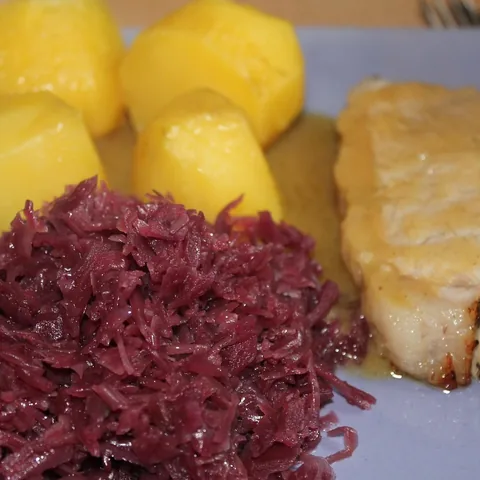
Tushkovana kapusta is shredded white cabbage stewed with chunks of pork, onion and carrot until soft and slightly sweet. A spoon of tomato paste and a bay leaf give it a gentle tang. It is a one-pot everyday meal, often eaten with rye bread or boiled potatoes.
Diets
Allergens
None of the 14 major allergens in a typical recipe.
What it is made of
Recipe
Ingredients
- 800 g white cabbage
- 400 g pork shoulder
- 1 onion
- 1 carrot
- 2 tbsp tomato paste
- 1 bay leaf
- 20 ml oil
- salt and pepper
Method
- Cut the pork into small cubes and brown it in oil.
- Add the chopped onion and grated carrot and fry for 5 minutes.
- Add the shredded cabbage and stir until it wilts.
- Stir in tomato paste, bay leaf, salt and 150 ml water.
- Cover and braise on low heat for 40 minutes, stirring now and then.
- Season and rest for 10 minutes before serving.
How to make it lighter
- Choose lean pork loin or chicken thigh.
- Skip the frying step and simply stew everything together.
- Mix half fresh cabbage with half sauerkraut for more flavour without extra fat.
History
Cabbage has long been one of the most common vegetables in Ukrainian kitchens because it keeps well through winter. Braising it with meat is a classic way to make a filling family meal from simple ingredients.
Count it in one photo
Point your camera at the table — Me Nutrition recognises Braised cabbage with pork (tushkovana kapusta) and every other dish, with calories and macros for each. Ate only half? Slide it.
Download on the App StoreSimilar dishes
Values are estimates per 100 g for a typical recipe; home and restaurant versions vary. Diets and allergens are worked out from the ingredients of a typical recipe — always check with whoever cooked the dish. Not medical advice. Nutrition data: Me Nutrition dish database v15. How we count →