
Varenyky with cabbage
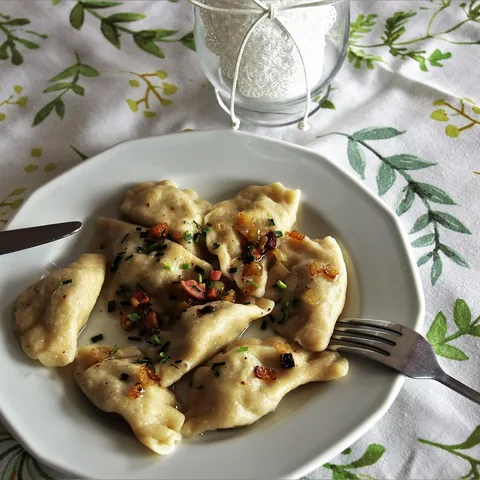
Cabbage varenyky are filled with a mix of fresh cabbage and sauerkraut slowly stewed with onion and carrot until soft and lightly caramelised. The filling is tangy and savoury, a nice contrast to the plain dough. They are served with fried onion and are a regular on fasting days and the Christmas Eve table.
Diets
Allergens
Contains (in a typical recipe):
What it is made of
Recipe
Ingredients
- 400 g flour
- 1 egg
- 200 ml water
- 1 tbsp sunflower oil, salt
- 300 g fresh cabbage, shredded
- 300 g sauerkraut, squeezed
- 1 onion (120 g)
- 1 carrot (100 g)
- 40 ml sunflower oil
Method
- Knead flour, egg, water, oil and salt into a smooth, elastic dough; cover and rest 30 minutes.
- Fry the onion and carrot in oil, add both cabbages and stew covered for 30–40 minutes until soft; cool.
- Roll the dough thinly and cut out 7–8 cm circles.
- Place a spoon of filling on each circle, fold and pinch the edges firmly.
- Boil in salted water for 3–4 minutes after they float.
- Serve with fried onion, or with sour cream if not fasting.
How to make it lighter
- Rinse the sauerkraut if you need less salt.
- Stew the filling with a splash of water instead of extra oil.
- Add mushrooms to the filling for more flavour.
History
Varenyky are one of the best-known Ukrainian dishes and are made at home for everyday meals and holidays alike; meatless fillings are traditional for the Christmas Eve table. The name comes from the Ukrainian word for "to boil".
Count it in one photo
Point your camera at the table — Me Nutrition recognises Varenyky with cabbage and every other dish, with calories and macros for each. Ate only half? Slide it.
Download on the App StoreSimilar dishes
Values are estimates per 100 g for a typical recipe; home and restaurant versions vary. Diets and allergens are worked out from the ingredients of a typical recipe — always check with whoever cooked the dish. Not medical advice. Nutrition data: Me Nutrition dish database v15. How we count →