
Dimlama
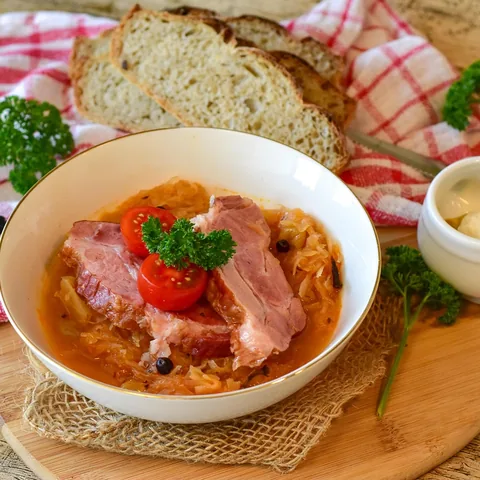
Dimlama is a layered one-pot meal in which meat and vegetables cook slowly under a tight lid with almost no added water. Pieces of beef or lamb go at the bottom, followed by onion, carrot, potato, pepper, tomato, eggplant and finally cabbage leaves that seal everything in. The vegetables release their juices and steam the meat until it is very tender. It is served straight from the pot with herbs and bread.
Diets
Allergens
None of the 14 major allergens in a typical recipe.
What it is made of
Recipe
Ingredients
- 700 g beef or lamb
- 600 g potatoes
- 400 g cabbage
- 2 carrots
- 2 onions
- 3 tomatoes
- 2 bell peppers
- 1 eggplant
- 30 ml oil, salt, cumin, garlic
Method
- Brown the meat briefly in oil at the bottom of a heavy pot.
- Layer onion rings, carrots, potato chunks, peppers, eggplant and tomatoes, salting each layer.
- Add garlic and cumin and cover the top with cabbage leaves.
- Close tightly and cook on very low heat for 1.5-2 hours without stirring.
- Serve the layers on a platter with fresh herbs.
How to make it lighter
- Skip the browning step and use lean meat to cut fat.
- Add more cabbage and peppers in place of some potato.
- Serve without bread; it is filling on its own.
History
Dimlama is a classic late-summer and autumn dish in Uzbekistan, when vegetables are plentiful. The name comes from the idea of cooking something covered and steamed in its own moisture.
Count it in one photo
Point your camera at the table — Me Nutrition recognises Dimlama and every other dish, with calories and macros for each. Ate only half? Slide it.
Download on the App StoreSimilar dishes
Values are estimates per 100 g for a typical recipe; home and restaurant versions vary. Diets and allergens are worked out from the ingredients of a typical recipe — always check with whoever cooked the dish. Not medical advice. Nutrition data: Me Nutrition dish database v15. How we count →