
Uzbek shurpa (Sho'rva)
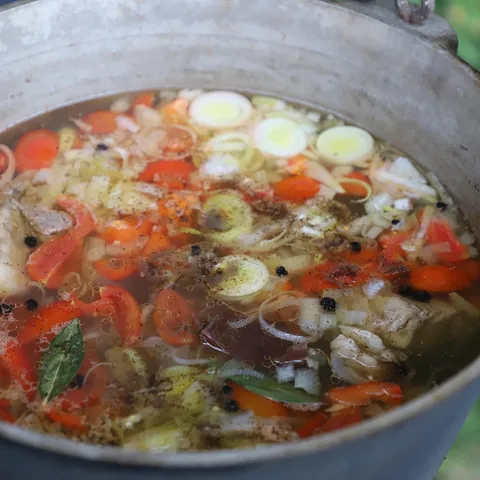
Sho'rva is a slow-simmered lamb soup with a clear, golden broth. Large pieces of lamb on the bone cook gently with whole potatoes, thick carrot chunks, onion, bell pepper and tomato, so every vegetable keeps its shape. It is finished with fresh herbs such as cilantro, dill or basil. The broth is often sipped first, then the meat and vegetables are eaten with bread.
Diets
Allergens
None of the 14 major allergens in a typical recipe.
What it is made of
Recipe
Ingredients
- 800 g lamb on the bone
- 600 g potatoes
- 2 carrots
- 2 onions
- 2 bell peppers
- 2 tomatoes
- 2.5 l water, salt, black pepper
- Cilantro and dill
Method
- Cover the lamb with cold water, bring to a boil and skim carefully.
- Add a whole onion and simmer gently 1.5 hours.
- Add carrots in large chunks, then after 15 minutes whole potatoes.
- Add peppers, tomatoes and the second onion in rings; cook until tender.
- Season and serve with plenty of fresh herbs.
How to make it lighter
- Chill the broth and lift off the fat before reheating.
- Use more vegetables and fewer potatoes.
- Choose lean shank or leg.
History
Shurpa is cooked across Central Asia, the Caucasus and the Middle East under similar names. In Uzbekistan it is a favourite home meal and a common remedy dish in cold weather.
Count it in one photo
Point your camera at the table — Me Nutrition recognises Uzbek shurpa (Sho'rva) and every other dish, with calories and macros for each. Ate only half? Slide it.
Download on the App StoreSimilar dishes
Values are estimates per 100 g for a typical recipe; home and restaurant versions vary. Diets and allergens are worked out from the ingredients of a typical recipe — always check with whoever cooked the dish. Not medical advice. Nutrition data: Me Nutrition dish database v15. How we count →