
Katlama (Uzbek flaky fried flatbread)
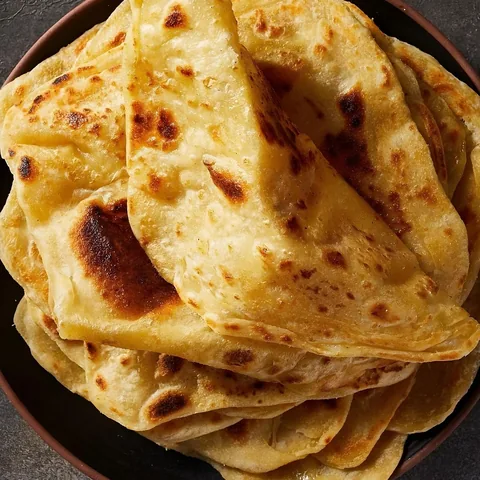
Katlama is made from a simple unleavened dough that is rolled very thin, brushed with butter or oil, then folded or coiled to create many layers. Fried in a pan, it puffs into crisp, flaky sheets with a soft interior. It is eaten warm for breakfast with tea, sometimes with sour cream, honey or a sprinkle of sugar.
Diets
Allergens
Contains (in a typical recipe):
What it is made of
Recipe
Ingredients
- 400 g flour
- 220 ml warm water
- 60 g soft butter
- 4 tbsp oil for frying
- 1 tsp salt
Method
- Knead flour, water and salt into a soft dough; rest 20 minutes.
- Roll it out very thin and brush with soft butter.
- Roll into a log, coil into a snail and rest 10 minutes.
- Flatten the coil into a disc about 5 mm thick.
- Fry in a little hot oil for 3–4 minutes per side until golden and flaky.
How to make it lighter
- Use a non-stick pan and brush the oil thinly.
- Serve with plain yogurt instead of sour cream.
- Make smaller discs to control the portion.
History
The word comes from a Turkic root meaning 'to fold', and similar layered breads exist across Central Asia. In Uzbek homes katlama is a quick bread made when there is no time for a tandoor.
Count it in one photo
Point your camera at the table — Me Nutrition recognises Katlama (Uzbek flaky fried flatbread) and every other dish, with calories and macros for each. Ate only half? Slide it.
Download on the App StoreSimilar dishes
Values are estimates per 100 g for a typical recipe; home and restaurant versions vary. Diets and allergens are worked out from the ingredients of a typical recipe — always check with whoever cooked the dish. Not medical advice. Nutrition data: Me Nutrition dish database v15. How we count →