
Sumalak (sprouted wheat Navruz pudding)
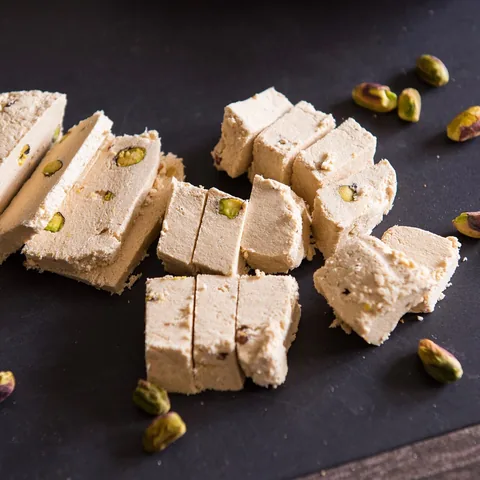
Sumalak is made from the juice of young wheat sprouts mixed with flour and oil and stirred in a huge kazan for many hours until it turns into a thick, dark brown paste. No sugar is added: the sweetness comes from the sprouted grain itself. It has a malty, slightly caramel taste and is eaten with a spoon or with bread.
Diets
Allergens
Contains (in a typical recipe):
What it is made of
Recipe
Ingredients
- 1 kg wheat grains (to sprout)
- 1 kg flour
- 200 ml cotton or sunflower oil
- 6 l water
- a few clean pebbles (traditional, optional)
Method
- Soak the wheat and sprout it for 3–4 days until the shoots are 2–3 cm.
- Grind the sprouts, cover with water, squeeze out the juice; repeat 2–3 times.
- Heat the oil in a large pot, add the flour and the sprout juice and stir well.
- Cook over low heat for 12–20 hours, stirring constantly so it doesn't burn.
- Rest covered until morning, then serve the thick brown paste.
How to make it lighter
- It is naturally sweet; never add sugar.
- Eat a small bowl: it is still energy-dense.
- Use less oil at the start; the sprouts carry the flavour.
History
Sumalak is the symbolic dish of Navruz, the spring new year, and is prepared by groups of women who stir it through the night while singing. Its preparation is part of the Navruz traditions recognised by UNESCO, and it is shared among neighbours as a sign of abundance.
Count it in one photo
Point your camera at the table — Me Nutrition recognises Sumalak (sprouted wheat Navruz pudding) and every other dish, with calories and macros for each. Ate only half? Slide it.
Download on the App StoreSimilar dishes

Values are estimates per 100 g for a typical recipe; home and restaurant versions vary. Diets and allergens are worked out from the ingredients of a typical recipe — always check with whoever cooked the dish. Not medical advice. Nutrition data: Me Nutrition dish database v15. How we count →