
Kovurma lagman (fried lagman)
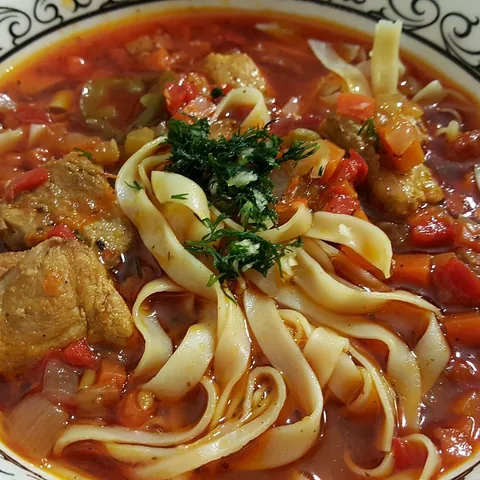
Kovurma lagman is the dry, fried cousin of soupy lagman. Freshly pulled noodles are tossed in a very hot kazan or wok with strips of beef, peppers, onion, tomato and garlic until lightly charred. Some cooks finish it with a fried egg on top. It is chewy, smoky and well seasoned, and comes without broth.
Diets
Allergens
Contains (in a typical recipe):
What it is made of
Recipe
Ingredients
- 400 g fresh hand-pulled or thick wheat noodles
- 350 g beef
- 2 bell peppers
- 1 onion
- 2 tomatoes
- 3 cloves garlic
- 40 ml oil
- 4 eggs (optional), salt, cumin
Method
- Boil the noodles until just tender, rinse and toss with a little oil.
- Stir-fry thin beef strips in very hot oil for 3-4 minutes.
- Add onion and peppers, then tomatoes and garlic; fry 5 minutes.
- Add the noodles, season with salt and cumin, and toss on high heat until lightly charred.
- Serve, topped with a fried egg if you like.
How to make it lighter
- Use a non-stick wok to cut the oil in half.
- Double the peppers and add cabbage for more vegetables.
- Skip the fried egg or use a poached one.
History
The word qovurma means fried in Uzbek, and the dish is a standard item on teahouse menus next to classic lagman. Its stir-frying technique reflects the Uyghur roots of Central Asian noodle cooking.
Count it in one photo
Point your camera at the table — Me Nutrition recognises Kovurma lagman (fried lagman) and every other dish, with calories and macros for each. Ate only half? Slide it.
Download on the App StoreSimilar dishes
Values are estimates per 100 g for a typical recipe; home and restaurant versions vary. Diets and allergens are worked out from the ingredients of a typical recipe — always check with whoever cooked the dish. Not medical advice. Nutrition data: Me Nutrition dish database v15. How we count →