
Suzma (strained yogurt cheese)
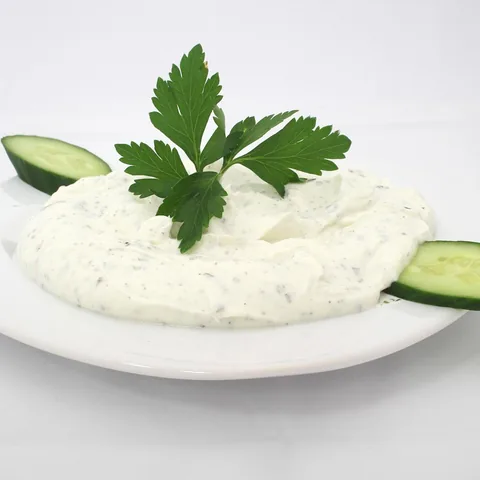
Suzma is katyk that has been hung in a cloth bag until most of the whey has dripped away. What remains is dense, smooth and tangy, somewhere between Greek yogurt and soft cheese. It is spread on warm non bread, mixed with garlic and herbs, thinned back into soups and, when salted and dried, turned into kurt.
Diets
Allergens
Contains (in a typical recipe):
What it is made of
Recipe
Ingredients
- 1.5 kg katyk or plain yogurt
- 1 tsp salt (5 g)
- optional: chopped dill, cilantro, garlic
Method
- Stir the salt into the katyk.
- Line a sieve with a double layer of muslin.
- Pour in the katyk, tie the cloth into a bag and hang it over a bowl.
- Leave in a cool place for 8–12 hours until thick.
- Unwrap and mix in herbs or garlic if you like.
- Keep in a jar in the fridge for up to a week.
How to make it lighter
- Strain low-fat yogurt for a high-protein, lower-fat suzma.
- Use it as a spread instead of butter.
- Season with herbs rather than extra salt.
History
Straining soured milk was a practical way to make it keep longer, and suzma is found across Uzbek, Tajik and wider Central Asian kitchens. It remains a staple of bazaars, where it is sold by weight from large bowls.
Count it in one photo
Point your camera at the table — Me Nutrition recognises Suzma (strained yogurt cheese) and every other dish, with calories and macros for each. Ate only half? Slide it.
Download on the App StoreSimilar dishes




Values are estimates per 100 g for a typical recipe; home and restaurant versions vary. Diets and allergens are worked out from the ingredients of a typical recipe — always check with whoever cooked the dish. Not medical advice. Nutrition data: Me Nutrition dish database v15. How we count →