
Adobo arequipeño (Arequipa-style pork adobo)
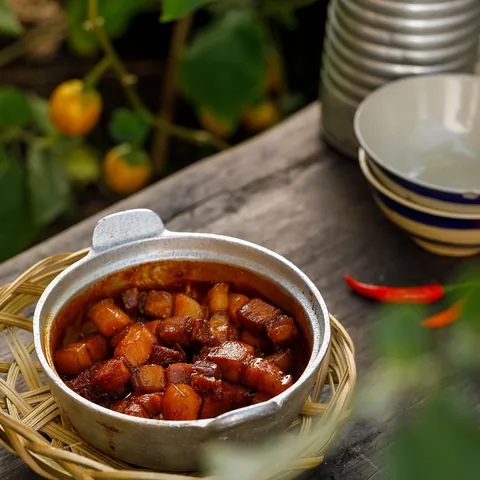
Adobo arequipeño is a pork stew that is famous as a Sunday breakfast in Arequipa. Chunks of pork are marinated overnight in chicha de jora with ají panca, garlic, cumin and oregano, then cooked slowly in a clay pot with thick slices of onion. The broth turns deep red, tangy and aromatic, and the meat becomes very tender. It is eaten with a round local bread for dipping.
Diets
Allergens
None of the 14 major allergens in a typical recipe.
What it is made of
Recipe
Ingredients
- 1.2 kg pork shoulder, in large chunks
- 500 ml chicha de jora
- 3 tbsp ají panca paste
- 6 garlic cloves
- 1 tsp cumin
- 1 tsp dried oregano
- 2 onions (300 g), in thick slices
- 1 tbsp vinegar, salt, black pepper
Method
- Blend chicha, ají panca, garlic, cumin, oregano, vinegar and salt.
- Pour over the pork and marinate overnight in the fridge.
- Place the meat and marinade in a heavy pot with the onion slices on top.
- Bring to a simmer, cover and cook on low heat for about 1½ hours.
- Add a little water if needed; the broth should be thin and red.
- Serve hot with bread.
How to make it lighter
- Trim visible fat from the pork before marinating.
- Skim the fat from the surface of the broth before serving.
- Serve with a salad and less bread for a lighter meal.
History
Adobo in Arequipa is traditionally served in picanterías, the typical eateries of the city, often early on Sunday mornings. Its use of chicha de jora links it to older Andean cooking, while the marinade technique came with the Spanish.
Count it in one photo
Point your camera at the table — Me Nutrition recognises Adobo arequipeño (Arequipa-style pork adobo) and every other dish, with calories and macros for each. Ate only half? Slide it.
Download on the App StoreSimilar dishes
Values are estimates per 100 g for a typical recipe; home and restaurant versions vary. Diets and allergens are worked out from the ingredients of a typical recipe — always check with whoever cooked the dish. Not medical advice. Nutrition data: Me Nutrition dish database v15. How we count →