
Chanakh (lamb baked in clay pots)
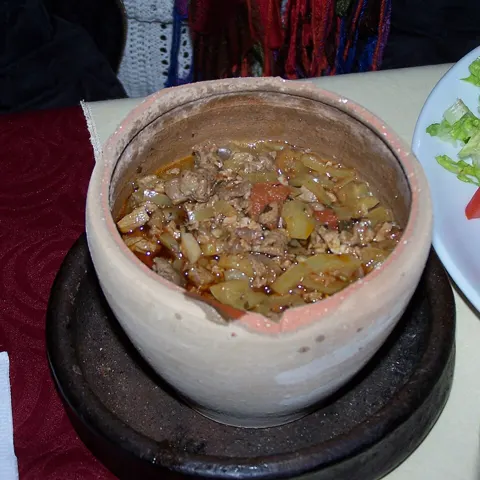
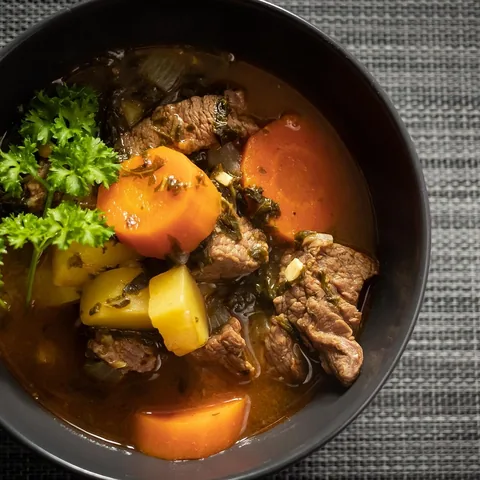
Chanakh is named after the earthenware pot it is cooked in. Chunks of lamb go in first, followed by eggplant, potato, tomato, pepper and onion, and the pots bake slowly until everything is soft and steeped in rich juices. Each person gets their own pot, eaten with bread and herbs.
Diets
Allergens
None of the 14 major allergens in a typical recipe.
What it is made of
Recipe
Ingredients
- 600 g boneless lamb, in chunks
- 2 eggplants, in thick slices
- 3 potatoes, in chunks
- 3 tomatoes, quartered
- 2 sweet peppers, in strips
- 1 onion, sliced
- Basil, cilantro, salt, pepper
Method
- Salt the eggplant slices for 15 minutes, then rinse and pat dry.
- Divide the lamb between 4 clay pots and season.
- Add onion, potato, eggplant, pepper and tomato, seasoning as you go.
- Pour a few spoons of water into each pot and add herb sprigs.
- Cover and bake at 170 °C for about 2 hours.
- Serve in the pots, sprinkled with fresh herbs.
How to make it lighter
- Use lean leg of lamb and trim the fat.
- Fill the pots with extra vegetables and less meat.
- Skip the bread on the side; the potatoes already provide starch.
History
Cooking in clay pots is an old tradition in Armenia and the wider Caucasus, and chanakh is one of the best-known pot dishes. Similar recipes exist in Georgian and Azerbaijani kitchens.
Count it in one photo
Point your camera at the table — Me Nutrition recognises Chanakh (lamb baked in clay pots) and every other dish, with calories and macros for each. Ate only half? Slide it.
Download on the App StoreSimilar dishes
Values are estimates per 100 g for a typical recipe; home and restaurant versions vary. Diets and allergens are worked out from the ingredients of a typical recipe — always check with whoever cooked the dish. Not medical advice. Nutrition data: Me Nutrition dish database v15. How we count →