
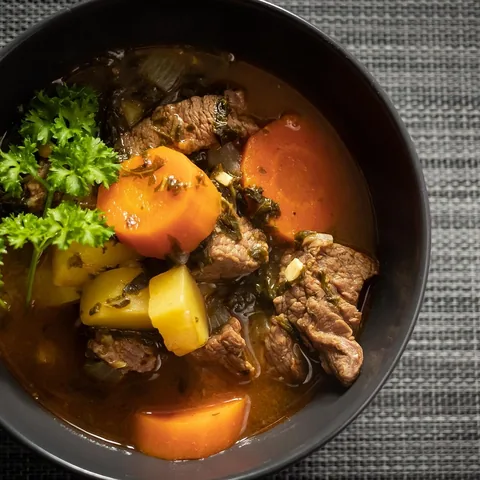
Kchuch (clay-pot casserole)
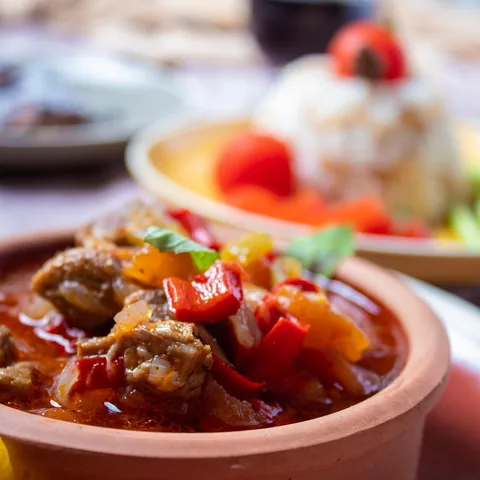
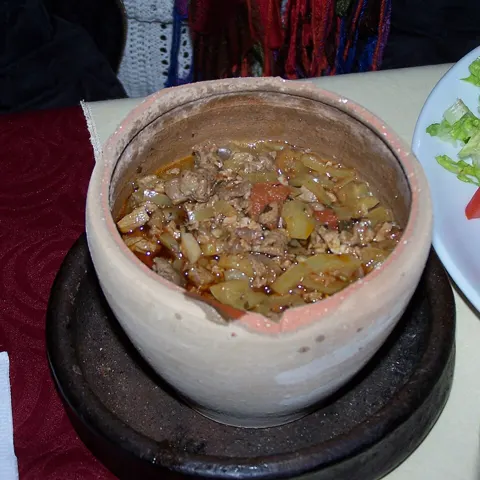
Kchuch is the name of a deep clay pot and of the casserole baked in it: pieces of beef, lamb or sometimes fish layered with eggplant, potato, green beans, tomato and pepper. Baked slowly with the lid on, the vegetables collapse into a thick, savory sauce around the meat. It is brought to the table in the pot and eaten with lavash and herbs.
Diets
Allergens
None of the 14 major allergens in a typical recipe.
What it is made of
Recipe
Ingredients
- 600 g beef, in chunks
- 1 eggplant, cubed
- 2 potatoes, cubed
- 150 g green beans
- 3 tomatoes, chopped
- 2 sweet peppers, sliced
- 1 onion, sliced
- Salt, pepper, basil, cilantro
Method
- Brown the beef lightly in a dry pan to add flavour (optional).
- Layer the meat in a large clay pot and season.
- Add the onion, potatoes, green beans, eggplant, pepper and tomatoes in layers.
- Pour in 150 ml water, cover and bake at 170 °C for about 2 hours.
- Check halfway and add a splash of water if it looks dry.
- Finish with chopped herbs and serve from the pot.
How to make it lighter
- Choose lean beef such as round or shank.
- Increase the green beans and eggplant for more volume with fewer calories.
- The fish version with trout is lighter still.
History
Clay-pot cookery has deep roots in Armenia, and kchuch is a flexible dish that changes with the season and what is in the garden. A fish version made with trout is also well known.
Count it in one photo
Point your camera at the table — Me Nutrition recognises Kchuch (clay-pot casserole) and every other dish, with calories and macros for each. Ate only half? Slide it.
Download on the App StoreSimilar dishes
Values are estimates per 100 g for a typical recipe; home and restaurant versions vary. Diets and allergens are worked out from the ingredients of a typical recipe — always check with whoever cooked the dish. Not medical advice. Nutrition data: Me Nutrition dish database v15. How we count →