
Choereg (Armenian Easter bread)
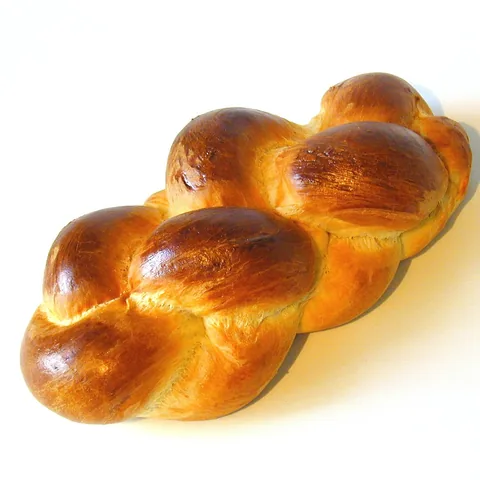
Choereg is a lightly sweet braided bread with a soft, tender crumb. Its special aroma comes from mahlab, ground cherry kernels, and sometimes a touch of fennel. The shiny egg-washed loaves are sprinkled with sesame seeds and eaten at Easter with tea, cheese or coloured eggs.
Diets
Allergens
Contains (in a typical recipe):
What it is made of
Recipe
Ingredients
- 600 g flour
- 10 g dry yeast
- 200 ml warm milk
- 120 g butter, melted
- 2 eggs plus 1 for brushing
- 100 g sugar
- 1 tsp ground mahlab
- salt
- 1 tbsp sesame seeds
Method
- Dissolve the yeast in the warm milk with a spoon of sugar and wait until foamy.
- Mix in the eggs, butter, remaining sugar, mahlab, salt and flour and knead into a smooth soft dough.
- Let it rise in a warm place for about 1.5 hours until doubled.
- Divide into portions, roll into ropes and braid into loaves.
- Let the braids rise 30 minutes, brush with beaten egg and sprinkle with sesame.
- Bake at 180 °C for 25–30 minutes until deep golden.
How to make it lighter
- Enjoy a thin slice with fresh cheese and fruit for a balanced breakfast.
- Replace a third of the butter with a neutral oil to lower saturated fat.
- Freeze extra slices so you are not tempted to eat the whole loaf.
History
Braided enriched breads for Easter are shared by many Christian communities of the Eastern Mediterranean, and choereg is the Armenian version. It is also baked in diaspora communities for other church holidays.
Count it in one photo
Point your camera at the table — Me Nutrition recognises Choereg (Armenian Easter bread) and every other dish, with calories and macros for each. Ate only half? Slide it.
Download on the App StoreSimilar dishes


Values are estimates per 100 g for a typical recipe; home and restaurant versions vary. Diets and allergens are worked out from the ingredients of a typical recipe — always check with whoever cooked the dish. Not medical advice. Nutrition data: Me Nutrition dish database v15. How we count →