
Matnakash (Armenian grooved bread)
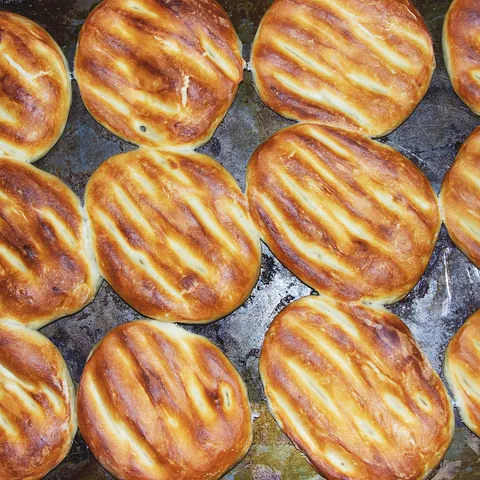
Matnakash is a leavened Armenian loaf whose name means roughly “finger-pulled”. The flat oval of dough is brushed with a sweet flour glaze and pressed with fingertips into long grooves before baking, which gives it a shiny, deep-golden crust. Inside it is light, soft and slightly chewy. It is torn by hand and eaten with cheese, herbs, soups and stews.
Diets
Allergens
Contains (in a typical recipe):
What it is made of
Recipe
Ingredients
- 500 g bread flour
- 320 ml warm water
- 7 g dry yeast
- 1 tsp sugar
- 1 tbsp sunflower oil (15 ml)
- 10 g salt
- glaze: 1 tsp flour, 1/2 tsp sugar, 100 ml water
Method
- Dissolve yeast and sugar in the water, add flour, oil and salt and knead 10 minutes.
- Let rise, covered, until doubled, about 1 hour.
- Make the glaze by boiling flour, sugar and water to a thin paste, then cool.
- Shape the dough into a flat oval on baking paper, brush with glaze and press deep grooves with your fingers.
- Rest 20 minutes, then bake at 230 °C for 18–22 minutes until deep golden.
How to make it lighter
- Add 100 g wholemeal flour for more fibre and a nuttier flavour.
- Eat it with herbs and cheese rather than butter to keep it lighter.
- Freeze slices and toast them straight from the freezer.
History
Matnakash is, together with lavash, the most common bread in Armenia and is sold in bakeries all over Yerevan. Its larger, puffier shape made it a favourite as a table bread through the twentieth century.
Count it in one photo
Point your camera at the table — Me Nutrition recognises Matnakash (Armenian grooved bread) and every other dish, with calories and macros for each. Ate only half? Slide it.
Download on the App StoreSimilar dishes
Values are estimates per 100 g for a typical recipe; home and restaurant versions vary. Diets and allergens are worked out from the ingredients of a typical recipe — always check with whoever cooked the dish. Not medical advice. Nutrition data: Me Nutrition dish database v15. How we count →