
Ddmov plav (Armenian pumpkin rice pilaf)
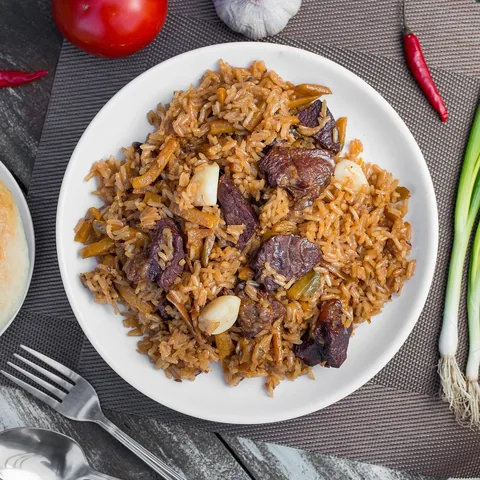
Ddmov plav is a pot-cooked version of the famous ghapama: rice layered with pumpkin chunks, dried apricots, raisins and butter, then steamed until the pumpkin melts into the grains. It tastes gently sweet, buttery and fragrant with cinnamon. It is a festive side for winter holidays and is often served at New Year and Christmas.
Diets
Allergens
Contains (in a typical recipe):
What it is made of
Recipe
Ingredients
- 300 g long-grain rice
- 500 g peeled pumpkin
- 80 g dried apricots
- 50 g raisins
- 60 g butter
- 2 tbsp honey
- 1 tsp cinnamon
- salt
- 150 ml water
Method
- Parboil the rice in salted water for 6–7 minutes and drain.
- Cut the pumpkin into 2 cm cubes and chop the dried apricots.
- Melt half the butter in a heavy pot and lay pumpkin cubes on the bottom.
- Layer the rice with the dried fruit and cinnamon on top of the pumpkin.
- Drizzle with the remaining melted butter mixed with honey and the water.
- Cover tightly and cook on very low heat for 30–35 minutes until the pumpkin is soft.
How to make it lighter
- Halve the butter; the pumpkin keeps the rice moist.
- Skip the honey: dried apricots and raisins already add plenty of sweetness.
- Use brown or basmati rice for a lower glycaemic response.
History
Ghapama, a whole pumpkin stuffed with rice and dried fruit, is a well-known Armenian holiday dish celebrated in folk song. The pilaf version is a practical everyday way to get the same flavours without baking a whole pumpkin.
Count it in one photo
Point your camera at the table — Me Nutrition recognises Ddmov plav (Armenian pumpkin rice pilaf) and every other dish, with calories and macros for each. Ate only half? Slide it.
Download on the App StoreSimilar dishes
Values are estimates per 100 g for a typical recipe; home and restaurant versions vary. Diets and allergens are worked out from the ingredients of a typical recipe — always check with whoever cooked the dish. Not medical advice. Nutrition data: Me Nutrition dish database v15. How we count →