
Ghapama (stuffed baked pumpkin)
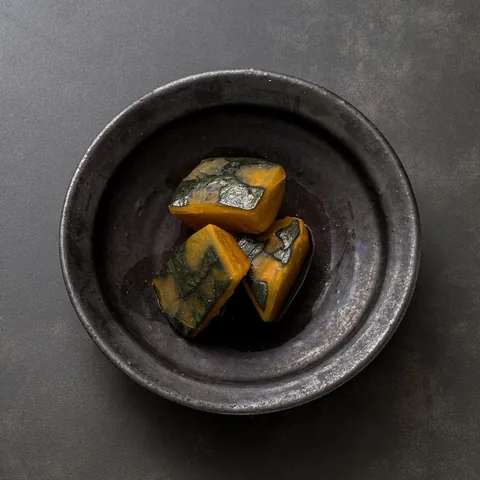
Ghapama is a whole pumpkin hollowed out and filled with parboiled rice, dried apricots, raisins, prunes, walnuts, butter, honey and cinnamon. It bakes for a couple of hours until the flesh is soft enough to scoop and the rice has soaked up the sweet juices. It is carried to the table whole and cut into wedges, each with pumpkin and filling.
Diets
Allergens
Contains (in a typical recipe):
What it is made of
Recipe
Ingredients
- 1 pumpkin (about 3 kg)
- 200 g rice, parboiled 5 minutes
- 100 g dried apricots, chopped
- 60 g raisins
- 60 g prunes, chopped
- 60 g walnuts, chopped
- 60 g honey
- 50 g butter, melted, 1 tsp cinnamon
Method
- Cut a lid off the pumpkin and scrape out the seeds and fibres.
- Mix the rice with dried fruit, walnuts, cinnamon, half the honey and the butter.
- Brush the inside of the pumpkin with the remaining honey and fill it with the rice mixture.
- Replace the lid, set on a tray with a little water and bake at 180 °C for 1.5-2 hours.
- Test with a knife: the flesh should be soft right through.
- Bring it to the table whole and cut into wedges.
How to make it lighter
- Halve the butter and honey; the dried fruit gives plenty of sweetness.
- Use brown rice or a mix with bulgur for more fibre.
- Treat it as a dessert or a sweet side and keep portions moderate.
History
Ghapama is a festive autumn and winter dish in Armenia, often served around New Year and Christmas. A cheerful folk song about it is well known and frequently sung when the pumpkin is brought out.
Count it in one photo
Point your camera at the table — Me Nutrition recognises Ghapama (stuffed baked pumpkin) and every other dish, with calories and macros for each. Ate only half? Slide it.
Download on the App StoreSimilar dishes
Values are estimates per 100 g for a typical recipe; home and restaurant versions vary. Diets and allergens are worked out from the ingredients of a typical recipe — always check with whoever cooked the dish. Not medical advice. Nutrition data: Me Nutrition dish database v15. How we count →