
Lavash (Armenian flatbread)
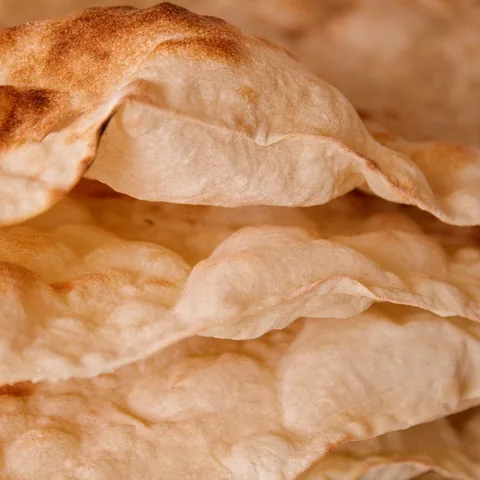
Lavash is a large, very thin and soft flatbread made from flour, water and salt. Sheets of dough are stretched over a cushion and slapped onto the hot inner wall of a tonir, where they bake in under a minute. Fresh lavash is supple and lightly blistered; dried sheets keep for months and are revived with a sprinkle of water. It is eaten with every meal, used to wrap cheese, herbs and kebab, and laid under grilled meat to catch the juices.
Diets
Allergens
Contains (in a typical recipe):
What it is made of
Recipe
Ingredients
- 500 g flour
- 280 ml warm water
- 1 tsp salt
- 1 tsp dry yeast (optional)
- flour for dusting
Method
- Mix flour, salt, yeast and water into a smooth, soft dough and knead 8 minutes.
- Cover and rest 30 minutes.
- Divide into 8 balls and roll each as thin as possible, stretching it over your hands.
- Bake one at a time in a very hot dry pan or on an upturned wok, 30–40 seconds per side.
- Stack the sheets under a towel so they stay soft.
How to make it lighter
- Lavash is almost fat-free; wrap it around grilled vegetables and herbs for a light lunch.
- Swap a third of the flour for wholemeal for more fibre.
- Dried lavash keeps well — sprinkle with water and cover to soften.
History
Lavash is the everyday bread of Armenia and is baked communally by groups of women around the tonir. In 2014 its preparation and cultural meaning were inscribed on UNESCO's list of the Intangible Cultural Heritage of Humanity.
Count it in one photo
Point your camera at the table — Me Nutrition recognises Lavash (Armenian flatbread) and every other dish, with calories and macros for each. Ate only half? Slide it.
Download on the App StoreSimilar dishes
Values are estimates per 100 g for a typical recipe; home and restaurant versions vary. Diets and allergens are worked out from the ingredients of a typical recipe — always check with whoever cooked the dish. Not medical advice. Nutrition data: Me Nutrition dish database v15. How we count →