
Jingalov hats (herb-stuffed flatbread)
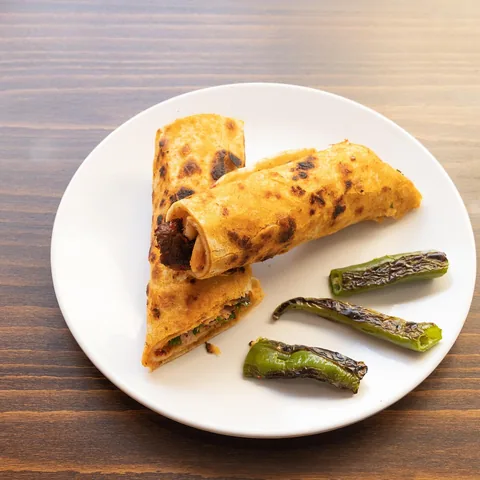
Jingalov hats is a thin, unleavened flatbread filled with a mound of finely chopped greens. Traditional versions use anything from ten to twenty herbs, such as sorrel, nettle, spinach, spring onion, dill and coriander. The bread is sealed into a half-moon or round and cooked on a hot griddle, so it is chewy outside and fresh, slightly sour and very green inside. It is eaten warm, often with a glass of tan or ayran.
Diets
Allergens
Contains (in a typical recipe):
What it is made of
Recipe
Ingredients
- 300 g flour
- 170 ml warm water
- 1 tsp salt
- 600 g mixed greens (spinach, sorrel, spring onion, dill, coriander, parsley)
- 3 tbsp sunflower oil (40 ml)
- salt
Method
- Mix flour, water and salt into a firm dough, knead and rest 20 minutes.
- Wash, dry and finely chop all the greens; toss with oil and salt just before using.
- Divide the dough into 4 and roll each into a very thin circle.
- Pile greens on one half, fold over and press the edges to seal; roll gently to flatten.
- Cook on a dry hot griddle or pan 3–4 minutes per side until spotted brown.
How to make it lighter
- Salt the greens at the last moment so they do not leak water.
- Use 1 tbsp oil in the filling to keep it very light.
- Add a little wholemeal flour to the dough for extra fibre.
History
The bread is closely associated with Artsakh and the Syunik region, where villagers forage wild greens in spring. It is sold widely in Yerevan today, especially during Lent, when the meatless filling fits the fast.
Count it in one photo
Point your camera at the table — Me Nutrition recognises Jingalov hats (herb-stuffed flatbread) and every other dish, with calories and macros for each. Ate only half? Slide it.
Download on the App StoreSimilar dishes
Values are estimates per 100 g for a typical recipe; home and restaurant versions vary. Diets and allergens are worked out from the ingredients of a typical recipe — always check with whoever cooked the dish. Not medical advice. Nutrition data: Me Nutrition dish database v15. How we count →