
Fasali (Azerbaijani flaky fried bread)
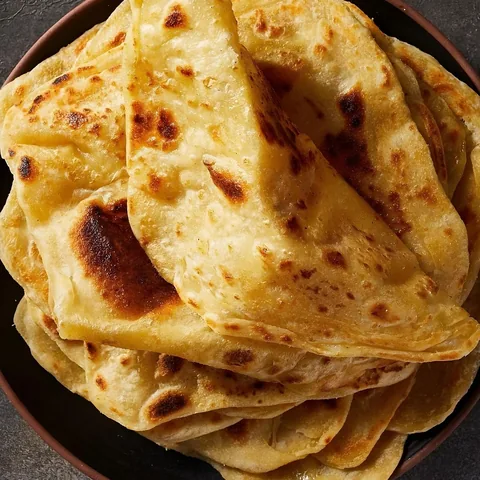
Fasali is a rich, flaky bread made by stretching dough very thin, brushing it with melted butter and folding or coiling it into many layers before frying it in a pan. The outside turns crisp and golden while the inside pulls apart in buttery sheets. It is served hot for breakfast with honey, jam, cheese or a glass of tea.
Diets
Allergens
Contains (in a typical recipe):
What it is made of
Recipe
Ingredients
- 400 g flour
- 220 ml warm water
- 1 tsp salt
- 120 g melted butter
- 2 tbsp oil for frying
- Honey to serve
Method
- Knead flour, salt and water into a soft, elastic dough and rest it for 30 minutes.
- Divide into 4 pieces and stretch each one on an oiled surface as thin as possible.
- Brush generously with butter, fold into an envelope, then roll it into a coil.
- Rest the coils for 10 minutes and press them flat into rounds 1 cm thick.
- Fry in a little oil over medium-low heat for 5–6 minutes per side until golden and cooked through.
- Serve hot with honey or cheese.
How to make it lighter
- Use half the butter and brush thinly; the layers will still separate.
- Cook in a non-stick pan with minimal oil instead of shallow-frying.
- Pair with cheese and fresh herbs rather than honey to limit sugar.
History
Fasali is a festive home bake in Azerbaijan, often made for guests and family gatherings. Similar butter-layered breads appear in neighbouring Turkish and Iranian cooking.
Count it in one photo
Point your camera at the table — Me Nutrition recognises Fasali (Azerbaijani flaky fried bread) and every other dish, with calories and macros for each. Ate only half? Slide it.
Download on the App StoreSimilar dishes
Values are estimates per 100 g for a typical recipe; home and restaurant versions vary. Diets and allergens are worked out from the ingredients of a typical recipe — always check with whoever cooked the dish. Not medical advice. Nutrition data: Me Nutrition dish database v15. How we count →