
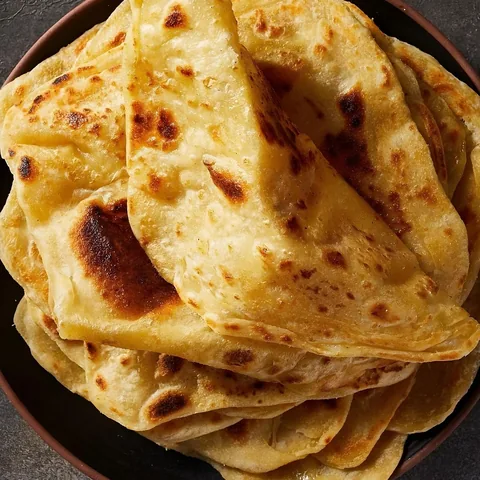
Lavash (Azerbaijani thin tandir bread)
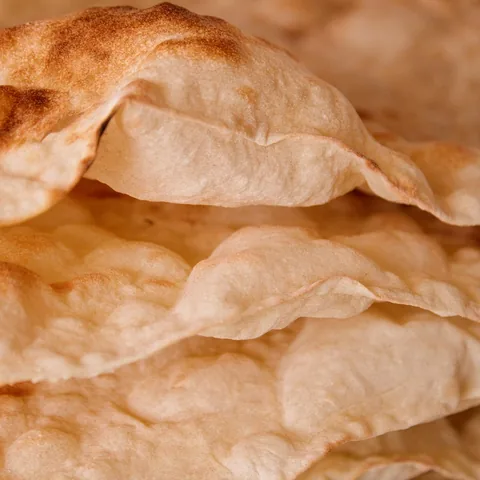
Azerbaijani lavash is a large, thin, oval flatbread that is soft and pliable when fresh and turns crisp as it dries. The dough is stretched over a padded cushion and slapped onto the hot wall of a tandir, where it bakes in under a minute. It is used to wrap kebabs, cheese and herbs, and to cover plov while it is served.
Diets
Allergens
Contains (in a typical recipe):
What it is made of
Recipe
Ingredients
- 500 g flour
- 300 ml warm water
- 3 g dry yeast or a piece of old dough
- 8 g salt
Method
- Mix flour, yeast, salt and water and knead into a smooth, elastic dough.
- Let it rest covered for 45 minutes.
- Divide into 6 pieces and roll each into a large, very thin oval.
- Bake one at a time on a very hot baking steel or inverted wok for 1–2 minutes, turning once, until lightly blistered.
- Stack under a damp towel so the breads stay soft.
How to make it lighter
- Lavash is very low in fat, making it a good wrap for lean fillings.
- Fill with grilled vegetables, herbs and yogurt for a light meal.
- Dry leftover lavash in the oven into crisps instead of buying chips.
History
Lavash baking, together with that of neighbouring countries, was inscribed by UNESCO in 2016 as shared intangible cultural heritage of Azerbaijan, Armenia, Iran, Kazakhstan, Kyrgyzstan and Türkiye. Lavash is traditionally exchanged at weddings and family celebrations.
Count it in one photo
Point your camera at the table — Me Nutrition recognises Lavash (Azerbaijani thin tandir bread) and every other dish, with calories and macros for each. Ate only half? Slide it.
Download on the App StoreSimilar dishes
Values are estimates per 100 g for a typical recipe; home and restaurant versions vary. Diets and allergens are worked out from the ingredients of a typical recipe — always check with whoever cooked the dish. Not medical advice. Nutrition data: Me Nutrition dish database v15. How we count →