
Barreado (Paraná clay-pot beef)
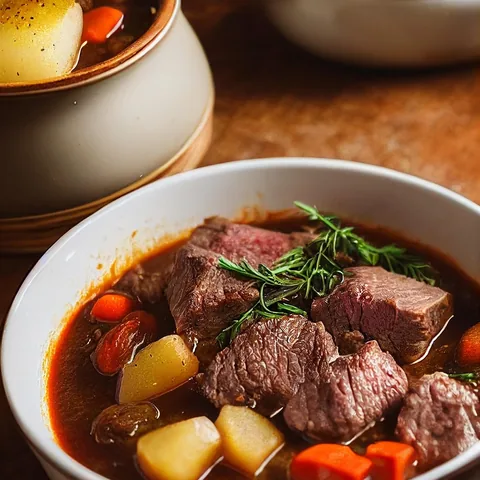
Barreado is beef cooked very slowly with bacon, onion and spices in a clay pot whose lid is sealed with a paste of cassava flour and water. After many hours the meat falls apart into a thick, deeply savoury broth. To eat it, hot cassava flour is mixed with the broth on the plate into a soft pirão, and the meat goes on top with slices of banana or orange. It is a heavy, warming feast dish.
Diets
Allergens
Contains (in a typical recipe):
What it is made of
Recipe
Ingredients
- 2 kg beef (brisket or chuck), in chunks
- 200 g bacon
- 3 onions
- 1 head garlic
- 4 bay leaves
- Cumin, black pepper, salt
- For sealing: cassava flour and water
- To serve: cassava flour, bananas, oranges
Method
- Layer bacon, beef, onion, garlic and spices in a clay pot.
- Add a little water; the meat releases its own juices.
- Put on the lid and seal the edge with a thick paste of cassava flour and water.
- Cook on very low heat or in a 140 °C oven for 10–12 hours.
- Break the seal and stir the meat into shreds.
- On each plate, mix hot broth with cassava flour into a soft pirão.
- Top with meat and serve with sliced banana.
How to make it lighter
- Use lean beef and skip most of the bacon.
- Skim the fat from the broth before serving.
- Keep the pirão portion small and add more meat and fruit.
History
Barreado comes from the coast of Paraná, especially Morretes, Antonina and Paranaguá, and is traditionally linked to Carnival, when a pot could cook unattended for days. The name comes from 'barrear', to seal with clay or paste.
Count it in one photo
Point your camera at the table — Me Nutrition recognises Barreado (Paraná clay-pot beef) and every other dish, with calories and macros for each. Ate only half? Slide it.
Download on the App StoreSimilar dishes
Values are estimates per 100 g for a typical recipe; home and restaurant versions vary. Diets and allergens are worked out from the ingredients of a typical recipe — always check with whoever cooked the dish. Not medical advice. Nutrition data: Me Nutrition dish database v15. How we count →