
Charkhlis pkhali (beetroot pkhali)
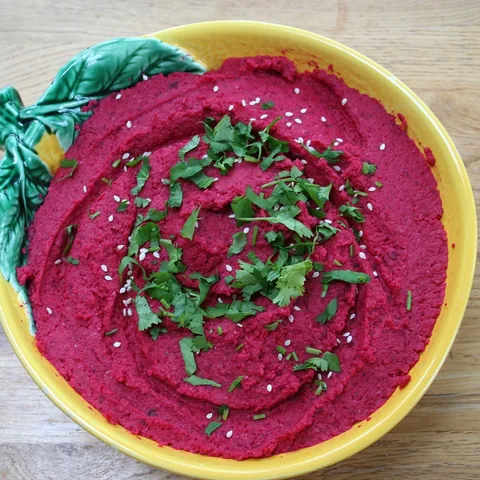
Beet pkhali turns cooked beetroot into a striking magenta spread or shaped balls, mixed with walnuts, garlic, coriander and khmeli suneli. A dash of vinegar sharpens the natural sweetness of the beet. It is served cold alongside spinach and leek pkhali as a colourful trio, with bread.
Diets
Allergens
Contains (in a typical recipe):
What it is made of
Recipe
Ingredients
- 700 g beetroot
- 150 g walnuts
- 3 garlic cloves
- 30 g coriander
- 1 tsp khmeli suneli
- 1 tbsp wine vinegar
- salt, chili (optional)
Method
- Boil or bake the beets whole until tender, about 1 hour.
- Peel and grate finely or mince, draining excess juice.
- Grind the walnuts with garlic, coriander, spices and salt.
- Combine the beet with the walnut paste and vinegar.
- Shape into balls or spread on a plate.
- Chill for 30 minutes and garnish with walnuts or herbs.
How to make it lighter
- Bake the beets in foil to keep flavour without extra fat.
- Use less walnut and add a spoon of yogurt for creaminess (not vegan).
- Serve with rye crispbread for fibre.
History
Beetroot is one of the most common vegetables used for pkhali in Georgia. Beet leaves are also used in a separate version, giving a green rather than purple dish.
Count it in one photo
Point your camera at the table — Me Nutrition recognises Charkhlis pkhali (beetroot pkhali) and every other dish, with calories and macros for each. Ate only half? Slide it.
Download on the App StoreSimilar dishes
Values are estimates per 100 g for a typical recipe; home and restaurant versions vary. Diets and allergens are worked out from the ingredients of a typical recipe — always check with whoever cooked the dish. Not medical advice. Nutrition data: Me Nutrition dish database v15. How we count →