
Beijinho (Brazilian coconut truffles)
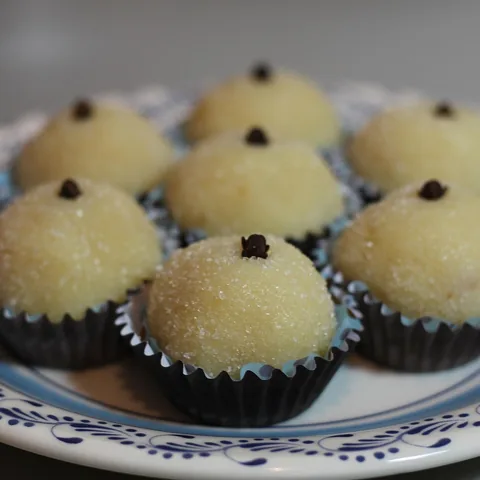
Beijinho, meaning little kiss, is the coconut sibling of the brigadeiro. Condensed milk, butter and grated coconut are cooked together into a thick paste, cooled, rolled into balls and coated in sugar or more coconut, with a clove pressed on top. They are a must at Brazilian children's birthday parties, served in tiny paper cases.
Diets
Allergens
Contains (in a typical recipe):
What it is made of
Recipe
Ingredients
- 395 g sweetened condensed milk
- 100 g grated coconut, plus extra for rolling
- 15 g butter
- Sugar for rolling
- 25 whole cloves
Method
- Put the condensed milk, butter and coconut in a saucepan.
- Cook over low heat, stirring constantly, for 10 to 15 minutes.
- Stop when the mixture pulls away from the base of the pan.
- Transfer to a buttered plate and cool completely.
- With greased hands, roll into small balls and coat in sugar or coconut.
- Press a clove into the top of each and place in paper cases.
How to make it lighter
- Roll in desiccated coconut instead of sugar to cut added sugar.
- Keep them small, about 15 g each.
- Use light condensed milk if available.
History
Beijinho became popular in Brazil in the mid twentieth century along with other sweets based on condensed milk, which was widely marketed at the time. It is usually served on the same party table as brigadeiros.
Count it in one photo
Point your camera at the table — Me Nutrition recognises Beijinho (Brazilian coconut truffles) and every other dish, with calories and macros for each. Ate only half? Slide it.
Download on the App StoreSimilar dishes

Values are estimates per 100 g for a typical recipe; home and restaurant versions vary. Diets and allergens are worked out from the ingredients of a typical recipe — always check with whoever cooked the dish. Not medical advice. Nutrition data: Me Nutrition dish database v15. How we count →