
Cajuzinho (peanut cashew-shaped sweets)
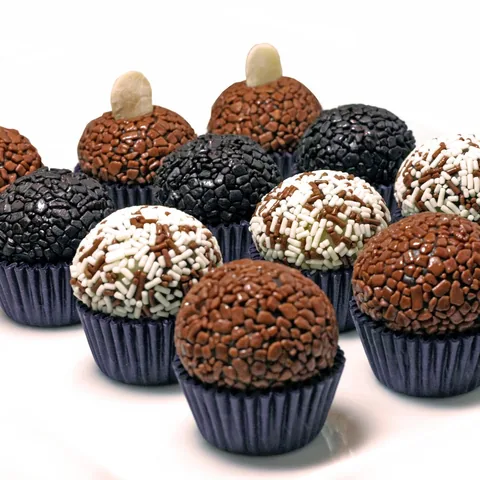
Cajuzinho means little cashew, and these sweets are moulded to look like the cashew fruit with its nut on top. Ground roasted peanuts are mixed with condensed milk, a little cocoa and butter, shaped into teardrops, rolled in sugar and crowned with half a peanut. They are a staple of Brazilian party tables alongside brigadeiros and beijinhos.
Diets
Allergens
Contains (in a typical recipe):
What it is made of
Recipe
Ingredients
- 250 g roasted unsalted peanuts, finely ground
- 395 g sweetened condensed milk
- 15 g cocoa powder
- 15 g butter
- Sugar for rolling
- 25 peanut halves to decorate
Method
- Combine the ground peanuts, condensed milk, cocoa and butter in a pan.
- Cook over low heat, stirring, for 8 to 10 minutes until thick.
- Spread on a buttered plate and leave to cool.
- Shape small pieces into teardrops resembling cashew fruits.
- Roll in sugar and press a peanut half into the wide end.
- Place in paper cases and serve.
How to make it lighter
- Skip the sugar coating; the sweets hold their shape without it.
- Use natural peanut butter for part of the peanuts to save time.
- Keep portions to one or two pieces since they are energy-dense.
History
The cashew is native to northeastern Brazil, but peanuts are cheaper and more widely available, so the sweet borrowed the cashew's shape rather than its nut. It became a common party sweet in the second half of the twentieth century.
Count it in one photo
Point your camera at the table — Me Nutrition recognises Cajuzinho (peanut cashew-shaped sweets) and every other dish, with calories and macros for each. Ate only half? Slide it.
Download on the App StoreSimilar dishes
Values are estimates per 100 g for a typical recipe; home and restaurant versions vary. Diets and allergens are worked out from the ingredients of a typical recipe — always check with whoever cooked the dish. Not medical advice. Nutrition data: Me Nutrition dish database v15. How we count →