
Pyachysta (braised whole pork)
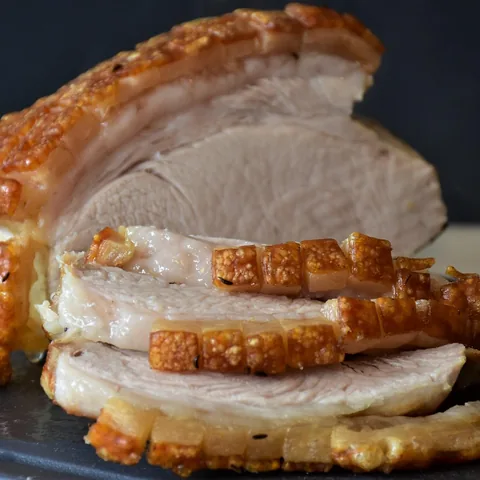
Pyachysta is a festive Belarusian dish in which a big piece of pork, or sometimes game or poultry, is cooked whole. It is first browned, then braised slowly with onion, carrot and spices until meltingly tender. The meat is sliced at the table and served with its juices, potatoes and pickles.
Diets
Allergens
None of the 14 major allergens in a typical recipe.
What it is made of
Recipe
Ingredients
- 1.5 kg pork shoulder in one piece
- 2 onions (160 g)
- 2 carrots (150 g)
- 5 garlic cloves
- 1 tsp black peppercorns
- 2 bay leaves
- 400 ml water or stock
- salt
Method
- Rub the pork with salt, pepper and crushed garlic and leave for at least 1 hour.
- Brown the meat on all sides in a heavy pot.
- Add the onions and carrots cut into large pieces, the bay leaves and the liquid.
- Cover and braise at 160 °C for about 2.5 hours, turning the meat once or twice.
- Rest the pork for 15 minutes, slice and pour over the reduced juices.
How to make it lighter
- Trim visible fat before cooking and skim the fat from the juices.
- Serve with boiled potatoes and plenty of vegetables rather than bread.
- Leftovers make a good lean sandwich filling with mustard and greens.
History
The name comes from an old word for cooking meat in one piece, and the dish was traditionally made for holidays and family gatherings. It is often mentioned among the classic dishes of the old Belarusian gentry and village table.
Count it in one photo
Point your camera at the table — Me Nutrition recognises Pyachysta (braised whole pork) and every other dish, with calories and macros for each. Ate only half? Slide it.
Download on the App StoreSimilar dishes
Values are estimates per 100 g for a typical recipe; home and restaurant versions vary. Diets and allergens are worked out from the ingredients of a typical recipe — always check with whoever cooked the dish. Not medical advice. Nutrition data: Me Nutrition dish database v15. How we count →